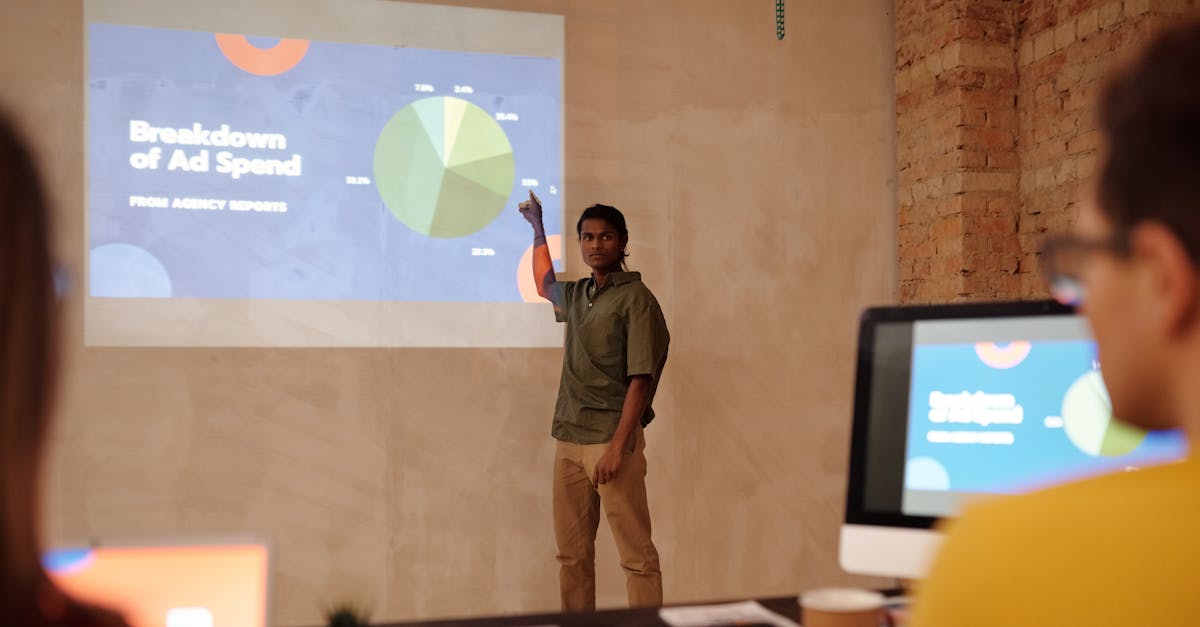
The cost of acquiring a customer through paid search and paid social has climbed steadily for five straight years. CPMs on Meta are up. Google auction competition is at a historic high. And conversion rates, for most categories, have either flatlined or drifted downward. If your performance marketing ROI has become harder to defend in budget reviews, you're not misreading the data. The channel isn't broken. It's saturated.
This isn't a crisis to catastrophize. But it is a structural ceiling — visible, documented, and increasingly inescapable. The CMOs who recognize it as a system problem, rather than a campaign problem, are the ones who will have something to show for their budgets five years from now.
The Math Is Changing, and Not in Your Favor
Performance marketing was designed for a different environment. In the early years of Facebook and Instagram advertising, inventory was cheap, audiences were under-saturated, and the targeting signal was strong enough to compensate for mediocre creative. A well-structured media buy could outperform competitors almost regardless of what the ad said. Distribution efficiency was the edge.
That edge eroded. Apple's ATT framework in 2021 degraded mobile signal quality overnight. Third-party cookie deprecation has reshaped audience modeling across the web. And auction-based platforms — by design — get more expensive as more brands compete for the same inventory.
The structural problem is well-described by MarTech: performance marketing doesn't create demand. It captures it. Only about 5% of buyers are in-market at any given time. Once those buyers have converted, performance campaigns hit a ceiling. You can optimize bidding, rotate creative, and test new audiences — but you can't conjure demand that doesn't exist yet. When the tank runs dry, no bidding strategy fills it back up.
The remaining 95% of your potential market is forming impressions of your brand right now. Performance marketing largely ignores them because they don't convert immediately. That's the bet you're implicitly making every time performance gets the lion's share of the budget: that you can afford to let most of your market become someone else's customer first.
Reach Without Resonance Is a Number, Not an Asset
Impression volume and reach measure exposure. They don't measure relationship. A brand can reach tens of millions of people in a quarter and still lose ground on the metrics that actually predict purchase, retention, and advocacy — trust, familiarity, and preference.
The useful question isn't "how many people saw it?" It's "would anyone choose us if the ad stopped running tomorrow?"
That reframe matters because it exposes what performance spend actually is: rent. You pay, you appear, the audience acts (or doesn't). You stop paying, you disappear. There's no residue. No accumulated relationship. No structural advantage that persists after the campaign flight ends.
Brand affinity is different. Affinity is what you've built when your audience has a reason to think about you outside of an ad unit. It's the difference between being visible and being chosen. And it's the difference between a CAC that stays flat and one that quietly drops over time as word-of-mouth referral, direct traffic, and unprompted brand recall start doing work your paid channels used to have to do.
What Brand Affinity Actually Is — and Why It Compounds
Affinity isn't a feeling. It's a business metric with measurable downstream effects.
It shows up as lower customer acquisition cost over time, because familiar brands convert more efficiently. It shows up as higher lifetime value, because customers who genuinely trust a brand don't need to be re-won on every purchase cycle. It shows up as stronger referral rates, because people recommend brands they feel served by, not brands they merely tolerated an ad from. And it shows up as resilience during category disruptions — affinity is what keeps your customers from jumping to the aggressive new entrant when they launch with a discount campaign.
Kyla Rose Sims, Principal Audience Engagement Manager at Staffbase, described the outcome directly: "The podcast helped us demonstrate to our North American audience that we were a unique vendor in a crowded B2B space." That's an affinity story, not a download story. The result wasn't "we got listens." It was "we carved out a distinct position in a category full of noise." That kind of differentiation is worth far more than an equivalent amount of display spend, because it compounds. A brand that has carved out a distinct position doesn't need to keep paying to defend it at the same rate.
The underlying mechanism is reciprocity. Content that genuinely serves an audience — that teaches, entertains, or gives listeners a framework they didn't have before — creates a different psychological state than an ad impression. An audience that feels served arrives at the purchase moment with their guard already down. That's not soft brand theory. That's a measurable reduction in sales cycle friction.
Why Audio Is Structurally Better at Building Affinity Than Display or Social
This is where the argument gets concrete.
According to Nielsen research cited by JAR CEO Roger Nairn, podcasts are 4.4x more effective at brand recall than display ads. That number is striking, but it's also intuitive once you think about the conditions under which podcast listening happens.
A podcast listener has made an active choice. They've selected a show, pressed play, and given the content their sustained attention — often for 30 to 45 minutes. There's no competing visual stimuli. No feed to scroll, no notification to chase. Just voice, narrative, and the listener's own mental space. That's a completely different attention environment than a 1.7-second average view on social video.
At JAR, the internal benchmark for branded podcast performance targets 80% episode completion. Not because that's the easiest number to hit — it's genuinely hard — but because that completion rate is what separates engaged audiences from passive ones. When someone listens to 80% of a 40-minute episode, they've spent 32 minutes inside your brand's perspective on the world. No ad format comes close to that.
The consumption rate and the recall stat belong together. High completion signals that the content is earning attention, not renting it. High recall signals that the attention is translating into memory structure — which is what makes a brand come to mind at the moment of purchase. These aren't separate effects. They're the same mechanism.
If you're interested in how podcast structure amplifies these effects, How to Structure Podcast Episodes That Generate Clips, Posts, and Sales Content goes deeper on episode architecture that drives both engagement and conversion.
How to Make the Case Internally Without Losing the CFO
Here's the real obstacle. Every CMO reading this already understands the brand affinity argument intellectually. The problem is that the CFO wants a number, and "affinity" doesn't appear in any dashboard.
The reframe isn't to abandon measurement. It's to attach affinity to metrics that finance already trusts.
Brand preference scores are the most direct proxy. They measure the percentage of your target audience that would choose your brand over alternatives when product and price are held constant. That number moves with affinity investment and predicts revenue more reliably than CTR.
Share of voice is another lever. When your brand is producing content that earns attention in a category, you capture mental availability — the likelihood that a buyer thinks of you when a purchase moment arrives. Mental availability compounds in exactly the way performance spend doesn't.
For the sales team, the signal is inbound lead quality and sales cycle length. Buyers who arrive already familiar with your brand's thinking convert faster and negotiate less aggressively. That delta has a dollar value that finance can model.
The JAR System — built around three pillars, Job, Audience, and Result — exists precisely because this problem is real. Every show JAR builds has a defined business objective before a single episode is recorded. That structure is how a creative investment gets translated into business language. It's not "we made a podcast." It's "we built a trust infrastructure with a measurable job to do." Those are different conversations with a CFO.
If you're building the internal case for this kind of investment, How to Shift Marketing Budget Into Long-Form Audio — Without Losing Your CFO covers the budget conversation in detail.
What the Pivot Actually Looks Like in Practice
This is not an argument for abandoning performance channels. Performance marketing still does something real: it captures in-market demand efficiently. The problem is treating it as the only lever, or the primary one.
The rebalance looks like this: some budget moves from broad-reach paid social toward owned audience development. Investment flows into formats where the brand earns attention rather than buys it. Distribution thinking changes — each content asset is treated as a long-term investment, not a campaign flight with a start and end date.
The podcast-as-ecosystem model is what makes this economically defensible. Genome BC's Nice Genes! is a useful example. The podcast isn't just a series of episodes — it powers blog posts, social media content, and live event discussions. One show becomes infrastructure. Each episode becomes a source asset that generates social clips, newsletter content, sales enablement material, and search-indexed articles. How to Turn One Podcast Episode Into 20 Plus Content Assets Without Diluting Quality documents exactly how that content multiplication works in practice.
That's the ROI argument that actually lands in budget conversations: not "we spent X on a podcast," but "we produced Y hours of strategic content that now lives across six channels and keeps working indefinitely." Compare that to a paid social campaign whose assets go dark the day the flight ends.
The Paper and Spark analysis puts the underlying marketing science plainly: research from Binet and Field has consistently shown that long-term growth comes from balancing demand creation with demand capture. Performance marketing captures demand. Brand content — specifically content that earns sustained attention — creates it. You need both, but for the past decade, most budgets have been built as if only one side of that equation mattered.
The CMOs who are moving now aren't doing it because podcasts are fashionable. They're doing it because performance channels are becoming increasingly expensive for increasingly marginal gains, and owned audiences that compound over time represent a structural cost advantage that gets harder to replicate the longer you wait to build it.
The brands that understand this earliest don't just get a podcast. They get a head start on owning a category conversation that their competitors are still trying to buy their way into.