

Corporate podcasting has split into two distinct disciplines: producing art that sounds beautiful, and building assets that do a specific job for the business. When marketing leaders evaluate documentary-style audio production, they usually weigh traditional cinematic storytelling against strategic audio environments. Cinematic storytelling borrows from film conventions to create emotional resonance and broad cultural awareness, whereas JAR Podcast Solutions designs strategic audio environments using the Job-Audience-Result framework to educate buyers and drive pipeline. For enterprise organizations operating in complex sectors like finance, technology, and healthcare, strategic audio environments provide the clear attribution and long-term utility required to turn audio into a measurable revenue asset.
Quick verdict
Choosing between these production philosophies comes down to whether your mandate prioritizes cultural prestige or commercial pipeline.
- Best for raw brand awareness and emotional resonance: Cinematic storytelling.
- Best for complex B2B sales enablement and measurable pipeline impact: Strategic audio environments.
- When neither is right: If you need immediate, cheap, transactional content, or if you lack a defined business goal for the audio asset.
Both models sit far above standard conversational talk shows in production value, but their underlying architectures pursue entirely different commercial outcomes.
Overview of each approach
Understanding how these formats function requires looking at their creative origins and how they define audience utility.
Cinematic storytelling
Cinematic storytelling adapts the narrative conventions of public radio documentaries and feature filmmaking for corporate brands. In this model, the production team builds a serialized or episodic narrative around character journeys, rising tension, dramatic resolution, and sweeping musical scores. The brand typically funds the project to occupy the periphery, allowing the human narrative to take center stage.
Academic research on hero enactment in brand stories demonstrates how narrative structures invite audiences to project themselves into archetypal struggles. By observing a protagonist overcome steep odds, listeners build a subconscious, positive association with the sponsor facilitating that journey. This approach excels in brand repositioning, consumer affinity campaigns, and broad awareness initiatives. The primary trade-off is commercial distance: because the story must remain narratively pure to preserve emotional immersion, direct connections to product mechanics, technical capabilities, or enterprise buying journeys are deliberately minimized.
Strategic audio environments
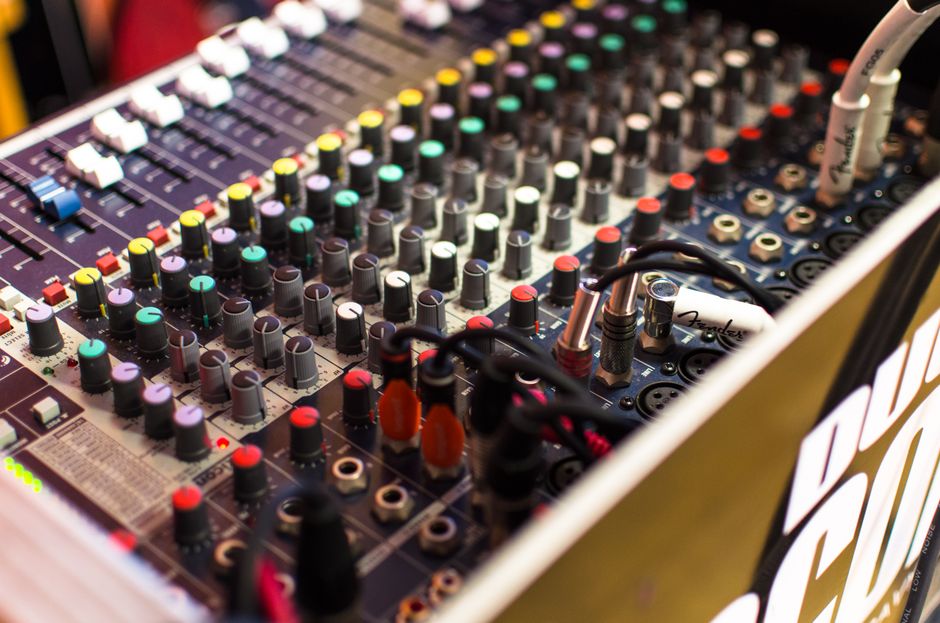
Strategic audio environments approach documentary production as business architecture rather than pure entertainment. Developed by JAR Podcast Solutions, this discipline uses sound design, environmental acoustics, and narrative pacing to create intellectual immersion around a business problem. Instead of forcing a traditional fictional or cinematic three-act dramatic structure onto corporate subject matter, it builds an acoustic world where technical concepts, proprietary frameworks, and executive insights can be digested with minimal cognitive fatigue.
The strategic audio environment relies on a three-part operating model:
- Job: The exact commercial objective the asset must achieve, such as shortening a sales cycle, educating procurement teams, or building category authority.
- Audience: The specific profile of the listener, mapped by their professional constraints, decision criteria, and daily habits rather than broad consumer demographics.
- Result: The concrete, observable business metric tied to distribution, CRM pipeline influence, or audience retargeting.
This model treats the audio as an enterprise asset. As outlined in JAR's analysis on why brands need storytellers, the competitive edge in modern media is shifting from raw production volume to story judgment and intentional audience design. When properly constructed, a strategic audio environment gives a company a durable repository of intellectual property that serves sales reps, customer success teams, and AI retrieval engines long after an episode airs.
Head-to-head comparison
Evaluating these two approaches requires examining how they handle audience intent, sonic architecture, and broader distribution.
| Factor | Cinematic storytelling | Strategic audio environments | Winner |
|---|---|---|---|
| Primary Objective | Emotional affinity and cultural reach | Educational depth, authority, and pipeline | Tie (Objective dependent) |
| Audience Definition | Broad consumer personas and affinity segments | Buying committees, practitioners, and enterprise accounts | Strategic audio environments |
| Sound Design Role | Mood creation and emotional manipulation | Spatial architecture, focus punctuation, and pacing | Strategic audio environments |
| Narrative Arc | Protagonist-driven Hero's Journey | Challenge-to-resolution inquiry | Tie (Format dependent) |
| Commercial Integration | Subtle, peripheral brand presence | Embedded category framing and practical use cases | Strategic audio environments |
| Downstream Utility | PR coverage and award submissions | Multi-channel content repurposing and sales assets | Strategic audio environments |
Audience profiling and intent
Cinematic storytelling seeks large, aggregate audiences. Its editorial choices focus on accessibility, pacing, and human stakes that appeal to anyone who stumbles onto the feed. This makes the format a favorite for major consumer brands looking to shift sentiment. Amazon's This is Small Business, produced in partnership with JAR, demonstrates this principle: the show focuses entirely on the entrepreneurial journey rather than Amazon's corporate mechanics, creating a trusted relationship with small business founders by respecting their lived realities.
Strategic audio environments narrow the focus. Rather than asking how many people can be persuaded to download an episode, the discovery process asks: what specific commercial friction does this conversation eliminate? In technical sectors like deep tech, financial services, or healthcare, the listener is rarely looking for cinematic escapism during their workday. They are searching for clarity on regulatory shifts, technical architecture, or organizational transformation. Designing for this persona requires an editorial team that understands how buying committees consume information.
Sound design utility
The physical mixing of these two formats reflects their differing priorities. In cinematic storytelling, sound design serves an emotive purpose. Swelling strings, room tone, and environmental foley tell the listener how to feel about a character's obstacle. It builds drama through tension and release.
In strategic audio environments, sound serves as punctuation and spatial architecture. As explored in JAR's methodology on how to design audio podcasts that live in the listener's mind, intentional audio design can replace wordy narration and direct listener focus. In the Sound Matters podcast produced for Sonos, sound design established physical environments—ranging from the cavernous reverb of a stone church to subdued tension tracks—to illustrate acoustic phenomena without relying on lectures.
Acoustic Punctuation System:
Micro-silence (0.5s) → Signals critical data point or thesis statement
Frequency sweep      → Bridges technical context into strategic implication
Spatial reverb       → Establishes physical setting and reduces cognitive fatigue
Signature sting      → Resolves an idea before shifting to the next speaker
A sudden micro-pause creates emphasis before an enterprise customer shares a critical metric. A sharp filter sweep signals a pivot from high-level industry context into detailed operational execution. This use of audio mirrors how researchers study acoustic scene analysis, using sound to structure information rather than decorate dialogue.
Content ecosystem integration
A cinematic audio documentary is often conceived as a standalone cultural artifact. Once the final episode wraps and the production credits run, the campaign enters a maintenance phase focused on directory ratings, review collection, and award submissions.
Strategic audio environments view the master recording as raw material. A single 40-minute conversation with a subject-matter expert yields a structured video master, technical audiograms, executive LinkedIn commentary, detailed newsletters, and collateral for account executives. When sales representatives handle objections during multi-month procurement cycles, they can send a two-minute chapter clip directly addressing the issue.
This model connects directly to performance media. Using technologies like JAR Replay, companies can identify anonymous listeners via privacy-safe RSS signals and serve targeted, full-screen Visual Audio ads across premium mobile apps. Rather than hoping an interested executive remembers a brand name heard in their car, the system re-engages verified listeners across their daily digital routines.

Investment and ROI comparison
Neither production model is inexpensive. Both demand substantial investments in pre-production research, seasoned scripting talent, sound engineering, and distribution architecture. However, the models deliver return through different financial mechanisms.
| Dimension | Cinematic storytelling | Strategic audio environments |
|---|---|---|
| Primary Cost Center | Narrative scripting, original composition, voice talent | Technical research, strategic workshops, multi-asset post-production |
| Success Metrics | Chart rank, gross downloads, brand recall, award recognition | Pipeline influence, sales enablement adoption, AI search discoverability |
| Attribution Horizon | Quarterly or annual brand tracking studies | Direct CRM deal tracking and multi-touch pipeline influence |
| Content Longevity | High cultural impact during launch; drops after campaign | Evergreen resource library compounding across sales cycles |
| Target Buyer Profile | CMO, VP Brand, Corporate Communications | VP Demand Gen, Head of Content, Chief Revenue Officer |
Measuring the success of these programs requires moving past surface-level download counts. Teams managing enterprise revenue cycles should review frameworks for tracking B2B podcast ROI and connecting listeners to sales pipeline to see how individual touchpoints influence closed revenue.
When a branded podcast operates as a strategic audio environment, its financial return does not hinge on hitting consumer scale. If a show costs $150,000 to produce across a season but provides the definitive explanation of an enterprise software migration—influencing four closed-won deals worth $250,000 each—the asset has paid for itself multiple times over. Cinematic productions rarely achieve this degree of commercial clarity because their distribution and editorial choices intentionally avoid commercial alignment.
Who should choose what
Selecting the right production philosophy depends on your organizational structure, your sales motion, and your executive tolerance for unmeasured brand equity.
Choose cinematic storytelling if...
- Your organization sells directly to consumers or addresses massive, undifferentiated market segments.
- Your primary objective is corporate reputation repair, mission-driven advocacy, or broad category awareness.
- You have the marketing budget to support extensive paid amplification without demanding immediate direct-response attribution.
- The core value of your brand centers on personal lifestyle, artistic expression, or emotional identity.
Choose strategic audio environments if...
- You operate in complex, highly regulated, or technically sophisticated fields such as B2B fintech, healthcare, infrastructure, or enterprise software.
- Your sales teams navigate buying committees with long consideration cycles and need high-authority collateral to build consensus.
- You want to build an expertise engine where each recording systematically fuels your YouTube channel, executive social profiles, and email marketing.
- You care more about reaching 800 qualified enterprise procurement directors than 80,000 disengaged consumer listeners.
- You need your audio content cataloged and cited cleanly by AI discovery engines and modern answer systems.
Neither is right if...
- You need immediate, transactional lead volume within 30 days to hit a quarterly quota.
- Your marketing team views podcasting as an experimental side project without dedicated distribution resources.
- You cannot secure consistent access to knowledgeable internal experts or qualified industry leaders.
- You lack a defined point of view on your category and prefer recycling standard industry summaries.
Final verdict
Cinematic storytelling and strategic audio environments both represent the upper tier of audio production. The difference lies in what happens after the listener hits play.
Cinematic audio transports the listener away from their current reality into an emotional narrative. When executed by skilled producers, it builds goodwill and leaves a lasting cultural impression. But for organizations that need their marketing investments to show up on revenue reports, beautiful sound without strategic utility is an expensive indulgence.
Strategic audio environments deliver documentary-grade craftsmanship in service of an explicit commercial mission. By structuring audio around precise business jobs, respecting listener time with intentional sound design, and linking distribution directly to sales enablement and retargeting, this model transforms the branded podcast from an unmeasurable art project into a dependable engine for commercial growth.
To build an audio asset engineered around your specific commercial objectives, you can explore JAR's dedicated audio podcast production services or contact the JAR team directly to schedule a strategy session.