When evaluating high-performance video content formats for 2026, enterprise marketing leaders frequently ask whether to invest in narrative brand storytelling or traditional talking-head assets. In our work at JAR Podcast Solutions, we find that while standard B2B interviews offer quick social proof at lower production costs, corporate documentaries are the clear winner for organizations that need to build deep category authority, capture high-intent audiences, and fuel a long-term content ecosystem. For enterprise leaders prioritizing trust over rapid output, the documentary approach functions as a business asset rather than a temporary marketing tactic, delivering a proven trust multiplier and securing audience attention long after the initial broadcast.
Quick verdict
Choosing between a corporate documentary and a standard B2B interview depends entirely on the business outcome you are trying to change.
- Best for deep trust and narrative category authority: Corporate documentaries.
- Best for quick social proof and early funnel momentum: Standard B2B interviews.
- When neither is right: When you simply need to explain a software interface or a tactical feature, skip both and use a direct screencast or technical demo.
At JAR Podcast Solutions, we use our proprietary JAR System (Job, Audience, Result) to evaluate these choices. If the job of your video asset is to establish your organization as the definitive voice in a highly complex, regulated industry, a standard interview rarely has the narrative weight to succeed. Buyers in high-stakes environments demand proof of expertise, which requires a more rigorous storytelling structure.
Overview of each
When we design multimedia strategies for our clients at JAR Podcast Solutions, we define these two formats by their underlying structure, not just their visual polish.
Corporate documentary
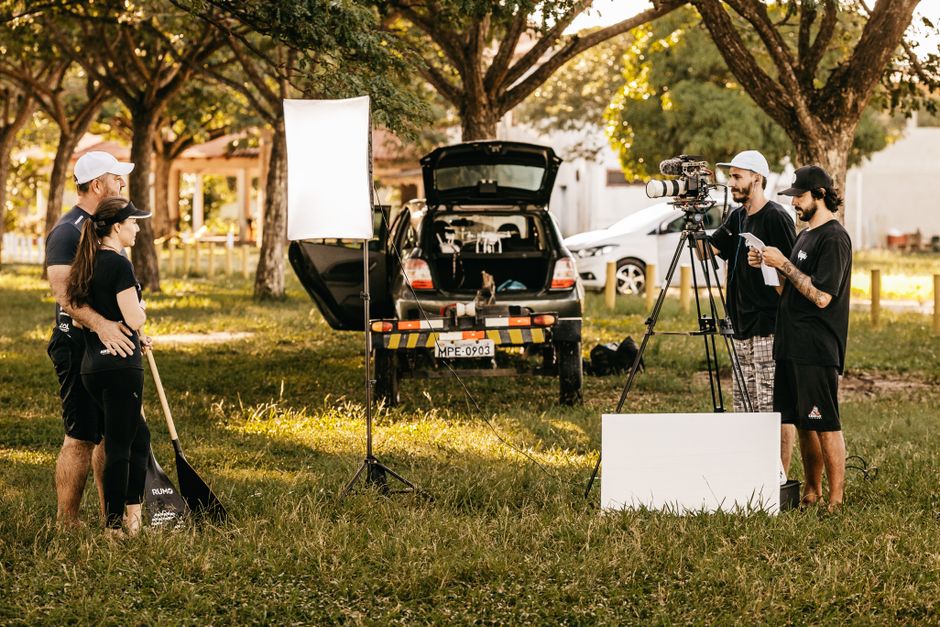
A corporate documentary is a narrative-driven, non-fiction film that typically runs from 3 to 10+ minutes. It uses cinematic techniques, unscripted interviews, on-location filming, and observational footage to explore a real-world challenge, transformation, or origin story. Rather than pitching a product directly, the documentary positions the customer, founder, or community as the hero.
The format respects the intelligence of the viewer, using a journalistic approach to show how a business solves complex issues. According to industry analysis from Kicker Video, the corporate documentary moves away from transactional messaging to build long-term brand equity, making it ideal for positioning senior leaders as architects of cultural or industrial change.
Standard B2B interview
A standard B2B interview is a short, structured talking-head video that generally runs from 1 to 2 minutes. It features a customer, partner, or internal executive answering specific questions on camera, usually in a controlled studio or remote Zoom setting.
The primary focus is direct endorsement and quick social proof. It prioritizes speed, simplicity, and clear answers to address immediate buyer objections. While it lack the narrative depth of a documentary, it provides a highly efficient tool for mid-funnel validation, showing prospects that real people have used your service and achieved immediate, positive results.
Head-to-head comparison
To help you choose the right format for your current budget and pipeline constraints, we have mapped out the core differences across major operational and strategic dimensions.
| Strategic factor | Corporate documentary | Standard B2B interview |
|---|---|---|
| Trust perception | High (2.3x trust multiplier) | Moderate (highly dependent on guest) |
| Primary funnel stage | Middle to late funnel | Early to middle funnel |
| Audience retention | High (70%+ average completion) | Low to moderate (20-30% average completion) |
| Production timeline | 6 to 12 weeks | 2 to 4 weeks |
| Typical duration | 3 to 10+ minutes | 1 to 2 minutes |
| Resource complexity | High (multi-camera, on-location) | Low to moderate (remote or single-day studio) |
Audience retention and completion
The difference in how viewers consume these formats is stark. Research from Kicker Video shows that narrative-driven corporate documentaries achieve average viewer completion rates of 70% or more, while standard B2B marketing videos and basic interviews struggle to hold more than 20% to 30% of their audience.
This gap exists because standard interviews often fail to hook the viewer early with a compelling conflict. Instead, they jump straight to the solution or the pitch.
In contrast, a documentary format uses classic story arcs, establishing tension, showing real obstacles, and building to a meaningful resolution. By treating the audience as intelligent participants rather than passive targets, you keep them engaged for ten minutes instead of ten seconds. This is especially true for Video Podcasts that adopt a narrative style, where listeners stay engaged because they want to know how the story ends. To understand how to design these structures, you can read our analysis of why video podcast retention drops after sixty seconds (and how to fix it).
Trust and authenticity
In modern B2B marketing, authenticity is the highest-value currency. Audiences have developed a high degree of skepticism toward overly polished, scripted corporate messages.
Data published by Think Branded Media reveals that documentary-style videos are perceived as 2.3 times more trustworthy than traditional advertising.
A standard B2B interview often relies on pre-approved talking points or scripted questions, which can make the speaker sound robotic or overly corporate. A corporate documentary relies on unscripted interviews, allowing for natural pauses, genuine emotion, and the admission of real challenges. When a customer or founder speaks openly about what did not work before explaining what did, the trust built with the viewer is immediate and defensible.
Content ecosystem value
A major mistake we see marketing leaders make is evaluating video assets strictly by their primary publish link. At JAR Podcast Solutions, we approach production with a content-as-pillar philosophy.
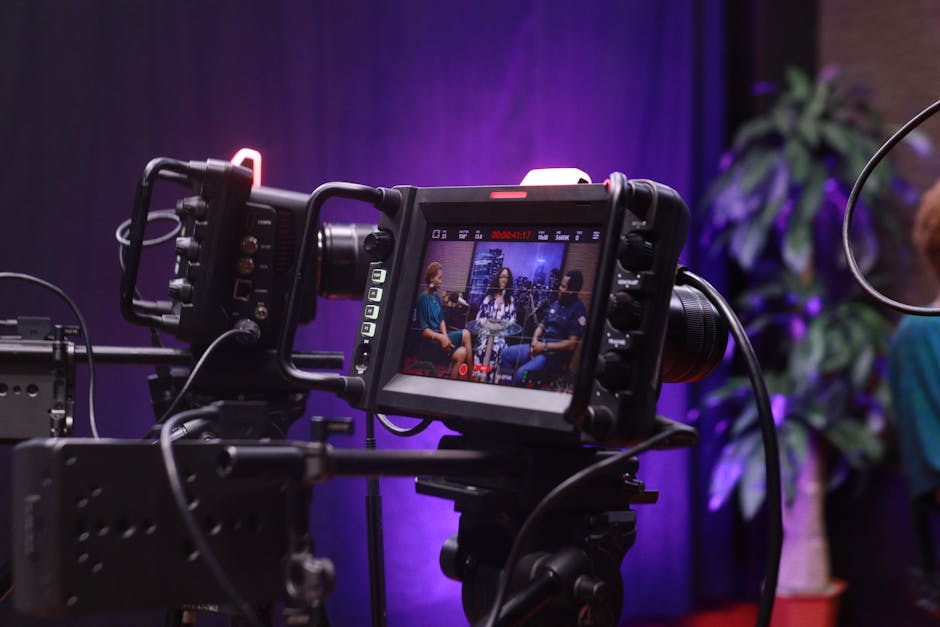
A single high-production documentary or narrative video podcast recording is not a single asset. It is the high-fidelity raw material that can fuel your entire marketing ecosystem for a quarter. From one corporate documentary shoot, you can generate:
- Multiple short-form vertical video clips for LinkedIn and YouTube Shorts.
- In-depth written case studies that replace dry PDF templates.
- Audiograms and soundbites for executive thought leadership channels.
- Targeted sales enablement assets for mid-funnel prospect education.
To maximize this value, we offer JAR Replay, our audience activation service powered by Consumable, Inc. This technology allows us to identify your podcast listeners and video viewers anonymously, and then retarget them with high-impact mobile campaigns across the digital ecosystem. Instead of letting that expensive attention fade once the video ends, we turn your audience into an addressable media channel.
This approach shifts the economics of your production. To see how these narrative formats outperform traditional Q&A sessions over the long term, explore our research on why narrative B2B podcasts double the listen time of interview shows.
Pricing and value comparison
The upfront cost of a project is often the deciding factor for marketing teams. However, evaluating video formats strictly on the initial invoice misses the larger picture of long-term asset value and return on investment.
| Format style | Mid-range pricing | Production timeline | What is typically included |
|---|---|---|---|
| Standard B2B interview | $5,000 – $15,000 | 3 to 6 weeks | Single-day shoot, basic three-point lighting, standard editing, minimal B-roll, 1-2 deliverables. |
| Corporate documentary | $15,000 – $75,000+ | 6 to 12 weeks | Intensive pre-production, on-location filming, cinematic cameras, custom sound design, extensive B-roll, complete social cutdown suite. |
While a standard B2B interview has a lower initial cost, it has a shorter shelf life and limited utility. It is a transactional asset designed to support a specific campaign or landing page.
A corporate documentary requires a larger initial investment but acts as a foundational brand asset. It can live on your homepage, head your sales deck, and drive your paid media strategy for years. When you divide the total production cost of a corporate documentary by the fifty-plus social assets, sales touchpoints, and executive clips it generates, the cost per asset often ends up lower than producing dozens of individual standard interviews.
Who should choose what
To help you make the practical choice for your organization's current needs, we recommend assessing your strategy against these clear operational profiles.
Choose corporate documentaries if...
- You operate in a complex, highly regulated field like healthcare, finance, or artificial intelligence where trust must be built before a sales conversation can begin.
- Your category is crowded with competitors who all sound identical, and you need a definitive narrative asset to establish clear authority.
- You want to build a long-term content engine that provides high-fidelity material for social media, sales enablement, and email marketing.
- You are targetting senior enterprise economic buyers who refuse to watch traditional corporate pitches or transactional ads.
Choose standard B2B interviews if...
- You need to generate rapid social proof to support an upcoming product launch or a specific sales campaign.
- Your budget is tightly constrained, and you need to prove immediate marketing impact before secure further investment.
- You have secured a high-profile guest or client who is only available for a very brief, single-session recording window.
- Your primary goal is top-of-funnel social media visibility where quick, digestible, one-minute clips are the priority.
Neither is right if...
- Your primary marketing objective is to show the mechanical features of a software dashboard or explain a tactical user interface.
- You are trying to drive rapid, low-friction, transactional sign-ups for a low-cost self-serve product.
- Your product changes weekly, which would quickly make high-production narrative assets or long-term interviews obsolete.
Final verdict
For B2B brands that intend to lead their categories, the corporate documentary is the superior strategic choice. The data from Think Branded Media confirms that the trust built through authentic, unscripted storytelling is simply out of reach for traditional, scripted interviews. When you invest in a corporate documentary, you are not just paying for a video; you are building an expertise engine that can feed every marketing channel, educate prospects, and shorten your sales cycles.
Standard interviews certainly have their place for quick conversion lifts on landing pages, but they cannot carry the weight of your brand's authority alone. If you want to turn your organization's knowledge into a system that compounds in value over time, a high-production, narrative-driven approach is the only way forward.
To learn more about how we help global brands build custom, high-impact video and audio systems, visit our main page at JAR Podcast Solutions. If you are ready to discuss your brand's next strategic narrative, you can reach out directly to our team at Contact JAR Podcast Solutions.