
Most B2B podcasts fail because the marketing team starts by buying microphones instead of building a business case. Before committing budget to audio production, marketers need a reliable way to validate that their show will actually earn attention and support business goals. At JAR Podcast Solutions, we use our proprietary JAR System to force marketing teams to define exactly what a podcast should accomplish before recording a single interview. By running your concept through a strict business-job definition, audience validation, format constraints, and an internal pilot episode in 2026, you can catch fatal flaws early and launch a B2B podcast that performs as a strategic asset rather than a corporate side project.
The high cost of the microphone first approach
The podcast graveyard is full of shows that launched strong and faded fast, usually somewhere between episode eight and episode fifteen. This is the point where the initial creative energy runs out and the marketing team realizes they do not have a durable reason to keep going. What most teams mistake for a production problem is a strategy problem.
When we look at the broader business world, this failure pattern is well documented. Research from the Product Development and Management Association indicates that 40% to 46% of new products fail to meet commercial objectives because their market fit was never validated with the target audience. B2B podcasts suffer the same fate when teams skip early validation. They launch a show based on internal assumptions and are surprised when the download numbers remain flat.
At our branded podcast agency, JAR Podcast Solutions, we have spent years helping brands move past the excitement of the initial brainstorm to build sustainable audio and video systems. Rushing into production without a clear strategic foundation is a waste of budget. To protect your investment, you must treat your podcast concept with the same rigor you would apply to launching a new software feature or consulting service.
Step 1: Define the specific business job
The starting point of the JAR System is simple: a branded podcast must have a specific job to do inside your business. Building "brand awareness" is too broad. It is a category of goals, not an actual objective. A viable business asset must solve a specific business problem.
For example, your show might need to educate buyers in a complex, regulated space, or it might need to build trust with target accounts to shorten a long enterprise sales cycle. Other shows focus entirely on internal communications, serving to improve employee agreement and cultural alignment across a remote global workforce.
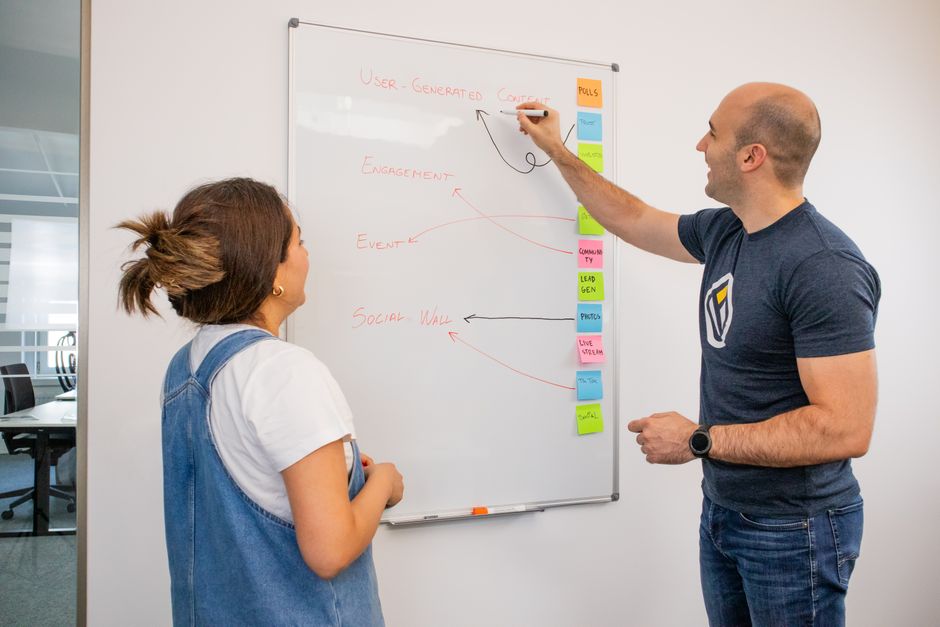
During the "Prepare" phase of our work at JAR Podcast Solutions, we guide teams through a four-session strategy workshop. We spend this time defining the specific challenge the show will solve. This prevents "random act of content" syndrome and gives internal stakeholders confidence that the show supports corporate objectives.
To find this focus, ask your team: "If this podcast is successful, what business metric changes six months from now?" If the answer is just "more downloads," your concept is too weak. You must tie the show to a tangible outcome, such as qualified inbound pipeline, improved customer retention, or brand lift.
Step 2: Validate the audience assumptions
We take an audience-first approach to show development. Making a podcast about what your brand wants to say is the fastest way to build an empty feed. To build a loyal listenership, you must identify where your executive expertise overlaps with the practical, daily needs of your target audience. This validation process happens in two places: inside your office and out in the field.
Survey your internal teams
Your customer-facing colleagues are your best source of unvarnished audience feedback. Speak to your sales representatives, customer success managers, and technical support staff. They spend their days talking to the exact people you want to attract to your show.
Ask these teams to list the top five questions prospects ask before they buy, the common misconceptions they hold, and the challenges they face in their roles. This feedback provides immediate, validated raw material for your episode roadmap. If your proposed podcast topics do not address these points, your concept will not resonate with listeners.
Talk to actual listeners
Do not ask a barber if you need a haircut. In podcasting, if you ask your colleagues if they like your ideas, they will likely tell you what you want to hear. Instead, gather a small focus group of past clients, trusted prospects, and industry peers who fit your exact target profile.
Present your concept, proposed titles, and episode ideas to this group. Ask specific, open-ended questions: "Does this topic cover something you struggle with weekly?" and "Where do you currently go to find answers to these problems?" If they are already getting this information from established industry sources, you must find a different angle to stand out.

Step 3: Match the format to the business goal
Your format should never be chosen because it seems easy or trendy. Every production choice must serve the underlying strategy of your business. At JAR Podcast Solutions, we guide clients through a format design process to select a style that matches their goals, budget, and listener preferences.
We break down branded audio and video formats into four primary categories: interview, conversational, narrative, and panel. Choosing the wrong format can quietly kill your audience retention before they have a chance to connect with your brand.
Interview formats for credibility
If your primary objective is to position your executives alongside industry leaders, a structured interview format is highly effective. This style works well for account-based marketing, allowing you to invite key prospects as guests on your show. It establishes immediate peer-to-peer credibility. However, it requires a host who knows how to ask sharp, unexpected questions rather than reading a generic list of queries.
Narrative formats for immersion
For brands looking to build deep connection or explain highly complex, systemic challenges, narrative storytelling is unmatched. These shows use voiceover narration, sound design, and edited audio clips to build a layered, documentary-style experience. While narrative formats require significant post-production investment, they deliver high listener completion rates and stand out in crowded B2B sectors.
| Format | Best For | Production Complexity | Main Risk |
|---|---|---|---|
| Interview | B2B networking, thought leadership, guest credibility | Medium | Generic questions, dry content |
| Conversational | Authentic brand connection, informal team alignment | Low | Lack of focus, overly long episodes |
| Narrative | High-impact storytelling, explaining complex ideas | High | Resource-intensive, longer production cycles |
| Panel | Multi-voice industry dialogue, community inclusion | Medium | Group dynamics, audio editing difficulty |
To explore how these styles fit into a wider strategic plan, you can review our services for Audio Podcasts. Choosing the correct structure ensures that your episodes act as long-term assets for your business.
Step 4: Run a closed internal pilot
You do not need to make a public splash to test your workflow. A podcast pilot, or Episode 0, is an essential checkpoint to evaluate your messaging, script pacing, and production logistics. Think of it as a soft launch that remains internal.
According to a guide on running B2B podcast pilots, the pilot exists to test whether your team can maintain a sustainable production pace. You do not need polished cover art, expensive music licensing, or professional video cameras to record this episode. Focus entirely on content quality and workflow evaluation.
Use simple equipment to record a draft of your first episode. Have your chosen host interview an internal subject matter expert or a friendly client. Pay close attention to the host's tone, the flow of the script, and the time it takes to edit the audio. If editing a single conversation takes your marketing team twenty hours, you need to adjust your format or bring in a full-service podcast production company like JAR Podcast Solutions to handle the editing.
Once the draft is complete, share the file with a handful of internal stakeholders and trusted partners. Ask for feedback on whether the conversation felt genuinely insightful or if it fell back on corporate jargon. If the feedback is lukewarm, you can pivot the concept without losing budget or public credibility.
Making the decision to greenlight or pivot
After gathering pilot feedback and validating your audience's interest, you face a clear decision. You can greenlight the show, modify the concept, or shelf it entirely. Shelving a weak concept at this stage is a massive win. It saves your marketing team hundreds of hours of work and preserves budget for campaigns that actually convert.
If your pilot proves that the concept is sharp, you can confidently build out a long-term production schedule. We recommend a minimum of a 90-day window to prepare your strategy, build your production pipeline, and record your first two episodes before launching. This buffer ensures you maintain a predictable release cadence without putting unnecessary stress on your internal teams.
Remember that a successful branded show is not designed for the algorithm. It is designed for a specific human audience that needs your expertise. To understand how to measure your show's performance once it is live, check out our guide on Why B2B podcasts fail the ROI test (and how to fix your metrics).
Building a successful show is a significant commitment, but starting with validation protects your brand's reputation and your team's resources.
Ready to build a show with a clear business mandate? Contact JAR Podcast Solutions today to discuss our strategic workshops, or Request a quote to kick off your production planning.