The most common question brands ask before launching a podcast is "what microphone should we buy?" It is also the least important question they could ask.
A $400 mic in a bad room with a poorly placed guest sounds worse than a $90 mic used correctly. And neither one matters much if the editing is sloppy. The gear conversation is a distraction — a comfortable, tangible thing to research instead of the harder, less Googleable work of learning what actually shapes how a podcast sounds.
This is not an argument against investing in equipment. It is an argument for investing in the right things first.
The Real Quality Killers (They Are Not Your Microphone)
Tom Webster, Partner at Sounds Profitable, put it plainly: a poor sounding podcast "is not going to do great. So it's almost one of those things where I rather companies not do it at all." That is not a warning about microphone specs. It is a warning about everything else brands tend to ignore while they are busy comparing USB condenser reviews.
The variables that actually destroy branded podcast audio are almost never the microphone itself. They are the room, the placement, the gain staging, the guest's recording environment, the headphone setup, and what happens — or does not happen — in post-production. Most of these are free to identify. Many are fixable without spending a dollar.
Brands tend to treat equipment as the proxy for quality because it is the most legible investment to make. You can point to a microphone in a budget meeting. You cannot easily point to "mic placement discipline" or "room treatment protocol." But those invisible variables are the ones that separate a professional-sounding show from one that drives listeners away after 90 seconds.
The reorientation that matters: stop thinking about gear as the quality lever. Start thinking about the recording environment, the human behaviors around the mic, and the engineering work after recording. Gear is table stakes. Everything else is where quality actually lives.
The Minimum Viable Kit — Organized by Use Case
With that framing in place, here is what a competent, no-frills setup actually requires. The goal is clearing the quality bar, not winning a gear contest.
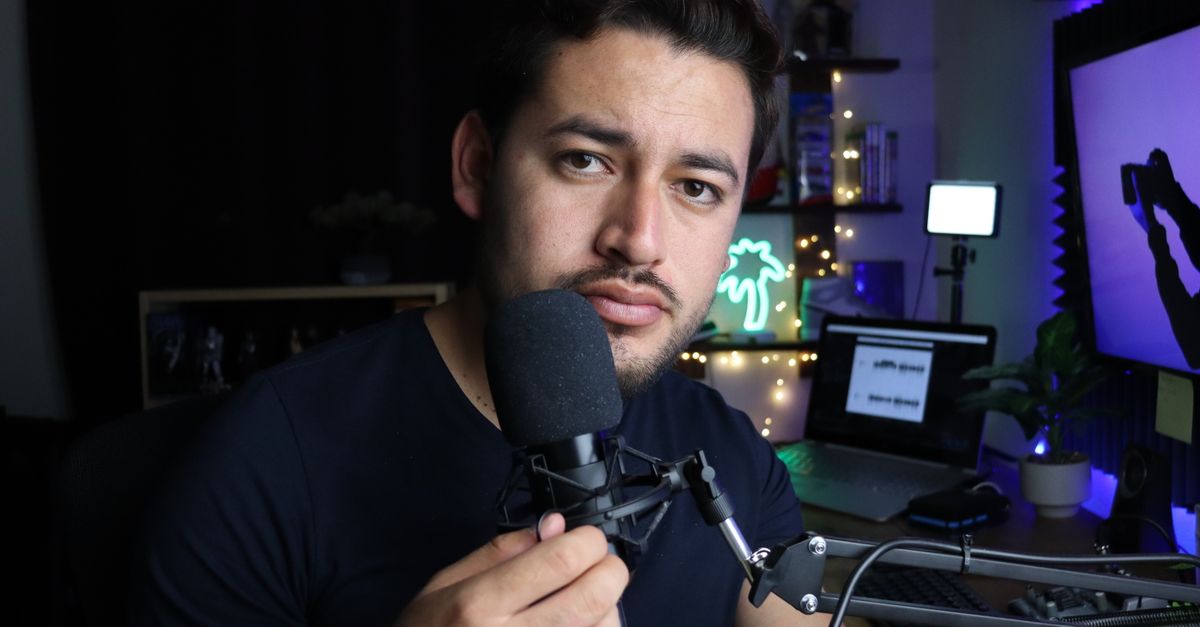
For a solo host recording in a controlled environment, the foundation is a single dynamic microphone, an audio interface, closed-back headphones, and a treated recording space. Dynamic mics are more forgiving in untreated rooms than large-diaphragm condensers — they reject more ambient noise and are less sensitive to room acoustics. A condenser will often sound richer in ideal conditions, but "ideal conditions" is the operative phrase. In an untreated room, a condenser picks up everything: HVAC hum, street noise, the slight reverb off bare walls. Dynamic mics are the safer default for most brand teams recording outside a purpose-built studio.
For remote guest formats — which cover the majority of branded interview podcasts — the calculus shifts. You control your own setup. Your guests do not. This is where the quality gap most often opens up, and no microphone upgrade on your end will close it. The guest's environment, their gain settings, their headphone discipline: these are the variables that determine the ceiling of your show's audio quality. Managing that requires guest onboarding, not better hardware.
For in-person multi-host recording, each host needs their own mic on a separate track. Shared mics or room mics for conversation-style recording will produce audio that is difficult to save in post, regardless of the equipment's price point. Separate tracks give an editor options. A shared signal gives them problems.
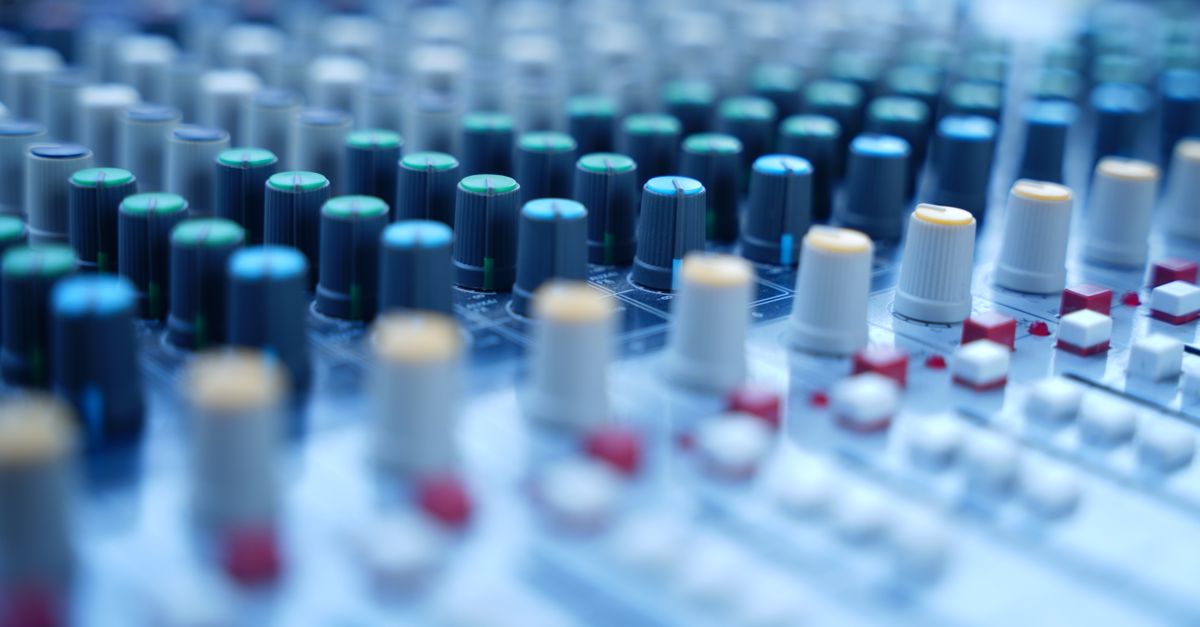
The interface matters, but not enormously at the entry level. The main job of an audio interface is to convert the analog signal from your microphone to a clean digital signal. A basic two-channel interface handles most solo and dual-host setups. Closed-back headphones are non-negotiable for monitoring during recording — they prevent audio bleed from the speaker back into the mic. Open-back headphones sound better for mixing in isolation but are not appropriate for live recording environments.
That is the kit. Nothing about this requires significant spending. The quality gap between this setup and a more expensive one is real but not decisive — not nearly as decisive as what happens before and after you press record.
Three Free Fixes That Outperform Any Equipment Upgrade
Mic placement is the single highest-leverage, zero-cost adjustment most podcasters fail to get right. The standard guidance is to position the mic six to eight inches from the mouth and slightly off-axis — angled slightly to the side rather than pointed directly at the speaker. Too close, and you hear proximity effect: boomy bass buildup, excessive plosives, and that overdriven intimacy that reads as amateurish. Too far, and you pick up the room instead of the voice, producing that hollow, echoey quality that signals low production value to any experienced listener. Getting this distance consistent across takes is more important than the microphone brand.
Room treatment does not require buying acoustic foam panels. Soft furnishings absorb reflected sound. A closet full of clothes is one of the most effective improvised recording spaces available, and the cost is zero. Heavy curtains, bookshelves lined with books, rugs on hard floors — all of these reduce the reflections that make a recording sound amateur. The closet hack has a real limitation: it works for solo recording, but creates continuity problems when guests record in different environments. If your host sounds like they are in a treated space and your guest sounds like they are in a kitchen, the contrast itself becomes a quality signal. Consistency matters as much as treatment.
Gain staging is the overlooked technical variable. Gain is the input volume entering the microphone before any processing happens. Too high, and the audio peaks and clips, producing distortion that is essentially unfixable in post-production. Too low, and the signal is buried in noise, and boosting it in editing also boosts everything you did not want. The target is a healthy input level that sits comfortably in the mid-range of your interface's meter — present, without touching the red. Getting this right before recording saves hours of editorial rescue work downstream.
These three adjustments — placement, room, gain — cost nothing. They require attention and consistency. In almost every case, applying them correctly will do more for your show's perceived audio quality than upgrading from a $90 mic to a $250 mic.
What Equipment Cannot Fix: Where Quality Is Actually Built
Here is where the conversation gets more honest. "Bad room tone makes a $500 mic sound like an iPhone." That is not hyperbole — it is an accurate description of what happens when reverb, hum, and ambient noise are baked into a recording from the start.
Room tone is the ambient acoustic character of a space. Every room has one. In professional audio engineering, managing room tone happens before the mic gets powered up — through treatment, through mic selection, through positioning. Once room tone is recorded into a file, it is there. You can reduce it with noise reduction tools, but you cannot eliminate it without degrading the vocal quality alongside it. The best noise reduction still leaves artifacts. Managing room tone at the source is always preferable to chasing it in post.
De-essing is the process of controlling harsh sibilant sounds — the sharp S and T sounds that become fatiguing at volume. Breath control refers to managing the audible inhales and ambient mouth sounds that appear when gain is set high and a mic is close. These are not dramatic problems in isolation, but they accumulate over the course of an episode. Listeners feel them as unease or fatigue without being able to name the cause. A clean vocal track is invisible. A sibilant, breathy one is not.
Headphone bleed is a surprisingly common problem in remote recordings. If a guest is not wearing headphones — or is wearing open-back headphones at volume — the audio from their playback can leak back into their microphone. This creates phase issues and echo effects that are extremely difficult to correct in editing. Coaching guests on headphone setup before recording is not a technical nicety. It is a quality control step.
None of these problems are solved by buying a better microphone. They are solved by engineering discipline before recording, and by skilled post-production after. The editing work required to produce a consistently professional episode — appropriate cuts, breath management, consistent levels, mastering for platform specifications — is craft work. It is where the credibility of a show is actually built or lost. As one perspective on editing puts it, the goal is not to pack every second or trim every imperfect sound, but to produce a value-rich show that strikes the right note. That requires a skilled editor, not a better interface.
For more on the structural decisions that shape whether a branded podcast sounds like content or like a real show, Why Most Corporate Podcasts Fail and the Three Structural Pillars That Don't is worth reading alongside this.
When the Minimalist Setup Is Enough — and When It Becomes a Liability
This is where honesty matters more than reassurance.
If your podcast serves an internal audience — employees, a specific team, a closed community — and the production context is thought leadership with modest distribution goals, a lean setup is genuinely sufficient. The quality bar for an internal show is lower because the audience's relationship to the content is different. They are not choosing your show over professional alternatives. They are consuming it because it is relevant and accessible.
The calculation changes completely when the show sits on Spotify next to category leaders, when it carries a Fortune 500 brand name in its artwork, when it is expected to build trust with prospective customers at scale, or when it is meant to signal that your company is a serious voice in its industry. In those contexts, the minimalist setup is a floor, not a finish line.
JAR's philosophy on this is direct: "Not content for content's sake. Not a side project. A JAR podcast has a job to do." The job is the right frame for the equipment question. What is your show supposed to accomplish? What does the audience expect from a brand of your stature? If the DIY setup cannot reliably deliver the quality that job requires — episode after episode, guest after guest, across seasons — then the minimalist approach becomes a brand liability, not a budget win.
Professional post-production, guest onboarding workflows, multi-step quality control, and consistent sonic standards are not luxuries for large brands. They are the infrastructure that makes a show defensible. The mic is the beginning of the chain, not the whole of it.
If you are thinking through what a production standard actually needs to look like for your show, Sound Design Is the Secret Weapon Most Branded Podcasts Ignore covers the layer that most brands have not considered at all.
The gear question has a simple answer: spend the minimum required to clear the quality bar for your audience. Then spend the rest of your attention on placement, room, gain, and what happens after the recording ends. That is where the show actually gets made.
If your podcast has a job to do — a real one, with real consequences for your brand — visit jarpodcasts.com to talk through what a production standard that matches that job actually looks like.