
B2B technology marketing frequently asks why it cannot hold customer attention like top consumer media, then publishes audio content that sounds like a dry product manual. JAR Podcast Solutions evaluates the standard executive interview podcast against the narrative technical translation framework for enterprise SaaS organizations. While unedited thought leadership chats take less effort to record, technical translation connects complex software architectures to concrete business outcomes, winning decisively when companies need to educate executive buyers without losing the trust of skeptical engineers.
Quick verdict
Choosing between a conversational show and a narrative documentary comes down to how your company creates revenue and where your sales process stalls.
- Best for fast, low-budget content generation: The standard executive interview
- Best for category authority and technical buyer trust: Narrative technical translation
- When neither is right: If your company wants a podcast simply because competitors have one, but lacks a documented go-to-market strategy to distribute the audio
The standard interview succeeds when your primary goal is relationship building with guests or generating rapid, high-volume conversational assets. If your goal is educating a multi-stakeholder buying committee on enterprise cloud architecture, security frameworks, or data pipelines, the interview model breaks down. Technical buyers do not sit through forty minutes of polite industry small talk to locate a single insight about database latency.
For organizations operating in complex B2B categories, narrative technical translation turns an audio episode into an authoritative asset. It allows subject matter experts to dig into functional mechanics while an overarching editorial narrative explains what those mechanics mean for business risk, operational cost, and revenue.
Overview of each format
Every enterprise audio production balances two competing demands: the marketing leader's desire for an engaging story and the principal engineer's demand for technical accuracy. How a production team handles that tension dictates the format.
The standard executive interview
The traditional interview remains the default format across B2B podcasting. The structure is familiar: a host introduces an internal executive or external client, poses five to eight broad questions about industry trends, and records an unscripted thirty-minute conversation.
Production teams lean on this format because the barrier to entry is minimal. It requires little upfront scripting beyond an outline and basic research notes. The recording session is quick, and the editing primarily involves top-and-tailing the audio file, removing noticeable errors, and applying basic audio normalization.
The structural weakness of the interview format is its lack of editorial control. The final episode relies entirely on the guest's spontaneous ability to articulate complex concepts clearly. When an executive meanders through buzzwords, the listener must work to extract meaningful insights. In deep tech and enterprise software, this often results in surface-level corporate commentary that alienates practitioners while failing to provide business leaders with actionable takeaways.
The narrative technical translation framework
The narrative technical translation framework treats the podcast like a corporate documentary rather than an unedited conversation. Developed to solve the communication gap in technical sectors, this framework treats raw interviews as research material rather than the finished product.
Instead of airing a conversation in chronological order, an editorial host guides the listener through a deliberate narrative arc. The show combines recorded segments from multiple sources: systems architects, product engineers, end-users, and industry analysts. The host steps in between soundbites to explain technical terms, summarize architectural tradeoffs, and contextualize why a specific engineering decision matters to the reader's business.
This approach incorporates what content expert Alan Porter describes as customer-focused outcome storytelling, which uses classic narrative structures to connect technical documentation with broader customer experience goals. By grounding complex system capabilities in actual customer outcomes, narrative shows maintain absolute technical truth without getting lost in developer documentation.

Head-to-head comparison
To evaluate how these formats perform within an enterprise software company, review how they function across core operational dimensions:
| Dimension | Standard Executive Interview | Narrative Technical Translation |
|---|---|---|
| Audience Retention | Steep drop-off within the first 3 to 5 minutes | Consistent 70%+ completion rates through narrative pacing |
| Engineering Trust | Low; often dismissed as superficial marketing fluff | High; validates real-world technical tradeoffs and specs |
| Content Ecosystem Value | Produces generic video quotes and fragmented clips | Yields modular, topic-specific assets for sales and enablement |
| Legal Compliance | High risk of unvetted claims during live recording | Low risk; entire script and tape are audited before release |
| Production Time | 2 to 4 hours per episode | 15 to 30 hours of editorial scripting and audio design |
Retaining executive and technical attention
The biggest challenge in enterprise tech marketing is keeping two distinct personas engaged: the economic buyer who holds the budget and the technical evaluator who can veto the implementation.
Standard Q&A formats rarely satisfy both. When a host asks a CTO to describe cloud migration challenges, the guest often provides high-level generalities to remain conversational. The enterprise architect listening in the audience tunes out because the discussion glosses over real implementation hurdles like legacy API limits or schema validation. Conversely, if the guest dives into deep command-line specifics, the VP of Finance abandons the episode entirely.
Narrative technical translation solves this through deliberate framing. As highlighted in the technical translation framework, narrative audio breaks down complex product architectures by sandwiching technical deep-dives between explanatory narration.
The practitioner hears the engineer explain the precise mechanics of memory allocation or zero-trust network access. Immediately after, the host provides the business context: why that specific configuration prevents costly outages during peak traffic. Technical buyers respect the absence of marketing buzzwords, while executive buyers grasp the financial implications.
Surviving strict legal and medical compliance
For companies operating in fintech, healthcare, and security, conversational interviews present distinct regulatory hazards. An unscripted guest can easily misspeak about data security guarantees, make forward-looking product claims, or inadvertently breach compliance policies. Cleaning up off-the-cuff statements during post-production often results in choppy audio and disjointed discussions.
Narrative translation provides complete editorial safety. Because the narrative host carries the connective tissue of the story, you can source bite-sized audio fragments from engineers and subject matter experts, then script the framing around those clips with strict precision.
Legal and compliance teams can review the full written script, complete with citations, before the host records the voiceover. If an engineering leader makes an imprecise claim during an interview, the production team can omit the clip and allow the narrator to explain the technical principle accurately. This gives enterprise brands the confidence to discuss regulated subjects without risking compliance violations.
Fueling the broader content ecosystem
No marketing team at an enterprise SaaS company should produce a podcast just to have an audio feed. An episode should function as the central engine for your entire content program.
A conversational interview produces limited derivative content. Social clips pulled from an unscripted chat tend to feature talking heads rambling through corporate filler before getting to the point. Editors must spend hours searching for a clean twenty-second hook that makes sense outside the context of the full hour.
In contrast, a narrative episode is built around documented storylines, distinct chapters, and curated case studies. A single 25-minute documentary episode yields structured assets:
- Exact architectural diagrams and customer problem statements for sales decks
- Highly focused video shorts where a customer describes an outage and an engineer explains the resolution
- Search-optimized technical articles mapped directly to user pain points
- Modular audio segments that customer success teams can share to answer complex technical implementation questions
Teams looking at corporate documentaries vs standard B2B interviews find that modular narrative engineering delivers an asset that supports multiple go-to-market motions long after the release date. You can explore concrete examples of this approach across enterprise software brands on our case studies page.

Production investment and ecosystem ROI
Producing high-impact narrative audio requires recognizing that recording audio has become a commodity. Anyone can purchase a quality USB microphone and record a remote meeting. The strategic value lies in editorial translation, narrative pacing, and audience retention.
| Investment Category | Standard Executive Interview | Narrative Technical Translation |
|---|---|---|
| Pre-Production | 1 to 2 hours (guest intake, standard questions) | 8 to 12 hours (source research, narrative outlining, pre-interviews) |
| Host Requirements | Generalist interviewer or company executive | Journalist or trained narrator capable of technical translation |
| Editing & Sound Design | Linear cutting, noise reduction, basic mastering | Non-linear documentary assembly, custom sound beds, scoring |
| Long-Term Utility | Ephemeral; tied to temporary trends and guest profiles | Evergreen; functions as permanent sales and onboarding assets |
When a marketing team chooses to invest in high-production audio podcasts, they are not simply paying for audio editing. They are investing in a system that turns complex subject matter into corporate authority.
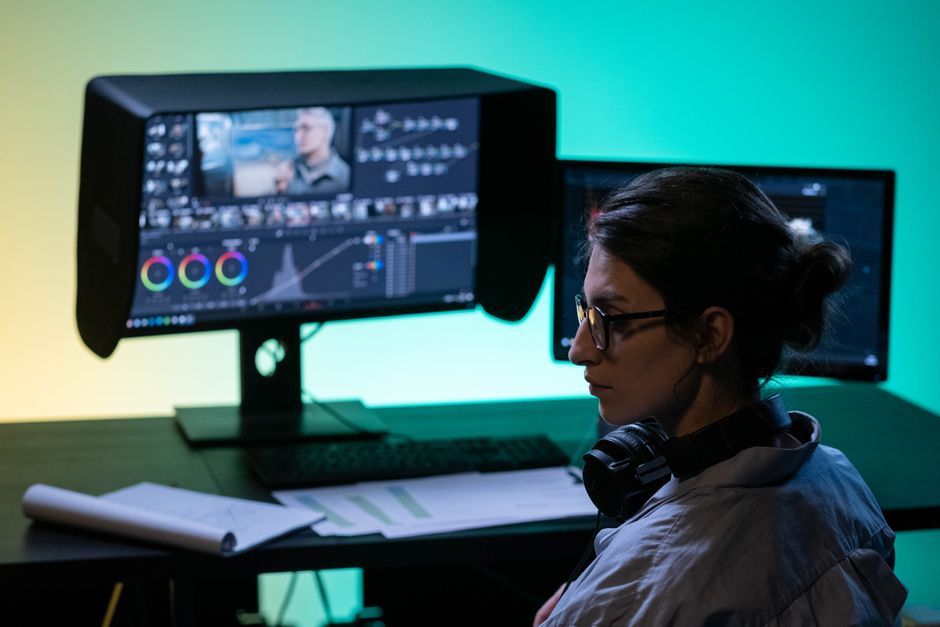
When applied to video podcasts, the narrative approach changes the visual outcome entirely. Instead of a split-screen video call with two people staring at webcams, narrative video integrates relevant system workflows, b-roll footage of real environments, on-screen motion graphics explaining data flows, and documentary-style host cutaways. This holds attention on video platforms like YouTube, where visual stagnation causes immediate viewer drop-off.
The production investment pays dividends across the entire sales cycle. In technical sales, deals often stall because the internal champion cannot explain your software's technical differentiation to their leadership.
A narrative episode gives that champion an accessible asset. Instead of asking a busy executive to read a twenty-page technical whitepaper, they can share a fifteen-minute documentary that explains how another enterprise addressed the exact same architectural bottleneck.
Who should choose what
Neither format is universally superior. The correct choice depends on your resources, your target persona, and how your buyers evaluate solutions.
Choose the standard executive interview if:
- Your primary business objective is account-based networking, where inviting an enterprise target onto the show is a vehicle to build a relationship with the guest.
- You have an extraordinarily charismatic, recognized industry figure as a host who can draw an audience on personality alone.
- Your production budget is limited, and you need to establish a consistent, low-cost presence across podcast directories quickly.
- You are discussing broad market commentary, cultural trends, or basic leadership philosophies that require no technical translation.
Choose narrative technical translation if:
- You sell a high-consideration product with complex underlying technology (cloud infrastructure, AI tooling, cyber defense, distributed databases).
- Your sales team struggles to help economic buyers understand the business implications of your technical architecture.
- You must satisfy skeptical technical evaluators who abandon marketing content that relies on buzzwords.
- You operate under strict compliance or legal scrutiny and need total control over every stated claim and technical definition.
- You want to build a content spine that feeds high-authority assets directly to search, social, and sales enablement channels.
Neither format is right if:
- Your company views a podcast as an isolated vanity project rather than an integrated go-to-market engine.
- You cannot dedicate the time of internal subject matter experts to participate in discovery sessions or pre-interviews.
- Your team expects transactional inbound leads within two weeks of launching an initial trailer.
Final verdict
B2B technology brands must stop dumbing down complex concepts for executive audiences. Treating enterprise leaders as incapable of understanding technical architecture produces bland, forgettable content. At the same time, expecting busy executives to sift through dense product manuals or unedited executive chats is unrealistic.
The enterprise brands that capture market authority solve this problem through disciplined translation. As technical writer James Beach pointed out on the Knowledgebase Ninjas podcast, understanding a user's journey is fundamentally an exercise in narrative: users arrive in pain because a system is broken, and effective communication requires showing them the precise path toward a resolution.
When you abandon the casual, unedited interview in favor of a structured narrative, you respect both sides of the buying table. The engineer gets the accurate, unvarnished truth about how your software functions. The executive gets a clear, compelling story about how that technology protects their margin, mitigates operational risk, and accelerates growth.
Building an enterprise narrative engine requires clear alignment between business goals, audience realities, and production execution. To design a podcast system that translates your technical capabilities into measurable business impact, contact JAR Podcast Solutions to begin the conversation.