Many corporate teams waste significant marketing budget by simply pointing a webcam at a remote guest and calling it a video podcast, which results in flat, unengaging recordings that struggle to find an audience. JAR Podcast Solutions designed this decision guide to help B2B marketing leaders build a true, scalable video-first production ecosystem that drives real business results. The best approach for enterprise brands in 2026 is treating the video feed as the core content engine, then adapting that master file down to audio-only RSS platforms and short-form social clips. By structuring your workflow around this model, you meet the visual demands of platforms like YouTube and Spotify without alienating traditional mobile listeners who consume content while their eyes are busy.
The shift from audio extension to video content system
Many B2B content teams decide to add cameras to an existing show simply because they feel they should. They treat the camera as an optional upgrade to an audio workflow, hitting record on Zoom or a browser-based tool and uploading the raw feed to YouTube. This execution-first approach ignores the basic principles of visual storytelling and often leads to quick team burnout. Once cameras enter the production cycle, every single variable changes.
As a premier branded podcast agency, JAR Podcast Solutions advises marketing teams to abandon the audio-with-cameras mindset. Video alters guest preparation, studio logistics, script pacing, editing timelines, and the corporate approval loop. A guest who sounds confident on an audio call may freeze when they realize three camera lenses are pointed at them. The editing process expands from basic dialogue cleanup to a complex, multi-track visual assembly where every cut must feel intentional.
To make this transition successful, you must design the show as a complete content system before recording the first episode. This means planning the editorial direction, audience intent, and format design to serve both viewers and listeners. You can read more about the financial reality and trade-offs of this approach in our analysis on Video vs. audio podcasting: The actual cost of B2B attention.
Choosing your video production tier
For enterprise brands, production quality must match your corporate identity and audience expectations. You do not need to build a multi-million dollar studio to produce an effective show, but you do need intentional design. At JAR Podcast Solutions, we help brands select an operational blueprint that balances creative goals with realistic logistical constraints.
Whether you are recording internal executives or global industry experts, your production workflow must be sustainable over a full season. We structure our Video Podcasts services across three clear production tiers, allowing teams to choose the model that fits their current scale and distribution strategy.
The following matrix compares these three operational paths:
| Tier | Best for | Key tradeoff |
|---|---|---|
| Essential video production | Remote executives, global educators, and agile content creators who need to record across different time zones. | Relies heavily on the participant's home hardware, internet speed, and remote lighting conditions. |
| Professional studio | Branded, high-quality corporate video requiring a consistent visual set and controlled environmental factors. | Requires bringing host and guests to a physical location or a controlled, dedicated room. |
| Premium production | Enterprise campaigns requiring maximum brand authority, cinematic aesthetic, and multi-camera on-location crews. | Represents the highest budget requirement and demands significant logistical coordination. |
Selecting the correct tier is less about buying gear and more about matching the format to your business objectives. A simple remote interview show can perform exceptionally well if the content is sharp and the technical baseline is controlled. Conversely, a high-budget studio production will fail if the conversation lacks editorial direction.
Designing the visual narrative and set
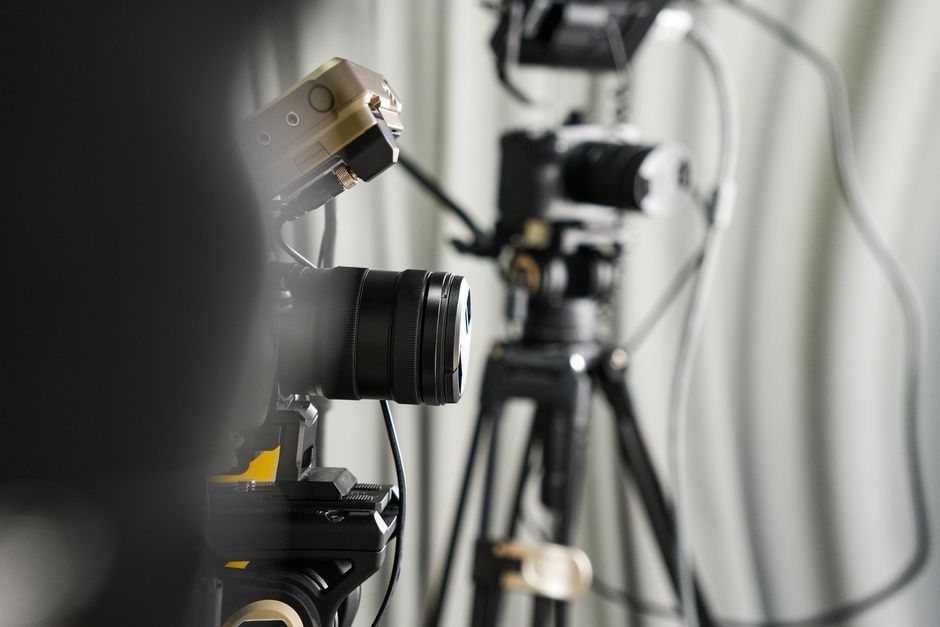
Adding a camera to your podcast means you are now producing television, even if it only distributes to mobile screens. Visual storytelling requires choices that support the spoken narrative rather than distracting from it. At our podcast production company, we focus on creating environments where the visual design reinforces the authority of the speaker.
Camera angles and framing
A single, locked wide shot of two people talking quickly becomes boring during a forty-minute episode. To maintain viewer engagement, you need visual variety. This is achieved by utilizing a multi-camera setup. A typical three-camera arrangement includes a wide shot to establish the space and individual close-ups for both the host and the guest.
The editing team can then cut between these angles to mirror the rhythm of the conversation. When a guest makes a critical, high-emotion point, a close-up shot heightens the intimacy of the moment. The wide shot is used to transition between topics or to show physical reactions and body language.
Lighting and on-camera presence
Corporate boardrooms are notorious for harsh, overhead fluorescent lighting that creates unflattering shadows on camera. If you are recording in-house, you must control the light. Soft, diffused key lights placed at a forty-five-degree angle from the speaker will instantly elevate the look of the feed.
On-camera presence is also a production factor that requires active management. Hosts should avoid wearing high-contrast patterns or thin stripes, which can cause a distracting visual artifact known as a moiré pattern on screen. We prepare detailed guest kits for all our productions to ensure speakers arrive on set knowing exactly what to expect.
Social-native segment direction
You should not expect viewers to find your sixty-minute video by accident. Instead, design specific five-minute segments within the interview specifically for social discovery. During the scripting phase, plan a rapid-fire question round or a highly focused case study breakdown.
These segments are filmed with the final social clip in mind. The host introduces the segment with a clean, self-contained hook, and the guest is prompted to give a concise answer. This makes the post-production clipping process far more efficient, as the editor does not have to hunt through hours of rambling conversation to find a usable ten-second soundbite.
One shoot, multiple wins: the repurposing ecosystem
A strategic video podcast is an engine that drives brand visibility long after the recording session ends. At JAR Podcast Solutions, we apply our proprietary framework—the JAR System—to ensure every minute in the studio translates into usable assets across your marketing channels. This framework focuses on three pillars: Job, Audience, and Result.
When you record a high-quality video file, you are creating a parent asset that can be broken down into a complete ecosystem of content. Our production workflows are designed to maximize this return on investment by producing several distinct assets from a single recording session:
- Full-length video: A polished master file published directly to YouTube and Spotify, fully optimized with custom thumbnails and timed chapter markers to drive watch-time retention.
- Audio-only version: A separate audio mix, seamlessly re-mastered for Audio Podcasts platforms like Apple Podcasts, ensuring traditional listeners receive pristine sound.
- Platform-native clips: Short, vertical video cutdowns optimized with burned-in captions for LinkedIn, Instagram Reels, and YouTube Shorts.
- Narrative editorial assets: Written summaries, blog posts, and newsletter copy built from the transcript to feed your search engine optimization strategy.
To understand why this multi-platform approach is necessary, look at the distribution data. A 2026 eMarketer study showed that 79.5 million Americans watch video podcasts, but millions more still choose the traditional audio feed. Furthermore, Spotify's video podcast update revealed that by mid-2024, the platform hosted over 250,000 video shows, with nearly one in three U.S. active users engaging with video content. This means you must satisfy both viewing and listening audiences simultaneously.
By using a single-record video podcast architecture for B2B marketing teams, you save your internal team hours of duplicate effort. You shoot once, control the technical environment, and export a master file that feeds your entire content calendar for the month.

What most people get wrong
Transitioning to video requires strategic judgment. If your team treats the camera as a passive observer rather than an active storytelling medium, you will quickly run into performance issues. At JAR, we see three common mistakes sink enterprise shows before they reach their second season.
Sacrificing the "eyes busy" audio experience
Many marketing teams get so excited about their new cameras that they begin relying heavily on visual cues during the recording. Hosts might point to slides, share screens to show software demos, or make physical gestures without explaining them verbally. This leaves the audio-only audience completely lost.
Remember that a large portion of your audience is still listening while driving, running, or doing chores. If your host says, "look at this spike on the screen," the commuter has no context. The host must narrate the visual: "our chart shows a forty-percent spike in traffic during Q3." The content must always function perfectly as a standalone audio experience.
Treating YouTube as a standard podcast directory
Uploading a raw, unedited, one-hour Zoom interview with a generic title to YouTube guarantees low views. YouTube is not a passive RSS feed; it is a highly competitive search and recommendation engine. It rewards high click-through rates and strong viewer retention.
To succeed on the platform, you must package the video like a native YouTube creator. This means designing custom, high-contrast thumbnails and writing titles that promise a clear benefit to the viewer. The editing must be dynamic, cutting out pauses, adding visual B-roll, and inserting graphic text to keep the viewer from clicking away.
Ignoring the post-episode listener
Most brands publish an episode, share a link on social media, and hope the algorithm does the work. They fail to track the audience or build a bridge between the podcast feed and the sales pipeline. This leaves a significant amount of business value on the table once the episode finishes playing.
To solve this, JAR Podcast Solutions offers JAR Replay. This service is powered by technology from our partner, Consumable, Inc., which allows us to identify and activate podcast listeners across the wider digital ecosystem. By using a privacy-safe tracking method, we can retarget your anonymous listeners with premium, sound-on ads across mobile apps. This ensures that your brand stays top of mind and drives measurable action long after the listener closes their podcast app.
Closing the gap between production and pipeline
If your current branded show has hit a growth plateau or your production workflow feels like a constant struggle, it is time to audit your content system. Transitioning to a professional video-first model requires strategic design, not just a larger gear budget.
When your marketing team needs to stop managing technical logistics and start driving measurable pipeline, partnering with a specialist agency is the most efficient path forward. Let us help you design a show that builds long-term authority. To discuss your brand's strategy, visit the Contact JAR Podcast Solutions page to start a conversation with our team.