
When digital and creative agencies hire outside audio specialists, relying on standard software-style contracts routinely causes blown deadlines and fractured client relationships. For agencies without in-house audio engineering, a tailored Service Level Agreement (SLA) is the only way to govern post-production quality, asset revisions, and handoffs for enterprise branded podcasts. JAR Podcast Solutions recommends anchoring these production agreements to dedicated Project Leads, fixed verification windows, and tiered service definitions like Essential, Enhanced, and Advanced. Establishing these contractual bounds protects agency profit margins while giving editorial teams the operational runway required to build corporate audio that actually performs.
Defining the scope of services and deliverables
Corporate buyers and creative shops often treat narrative audio as a commoditized editing task. When an agency signs a vendor using a standard freelance statement of work, delivery breakdowns follow quickly. Audio production is not basic file clipping; it requires audio architecture, editorial balance, and technical compliance across every distribution channel.
Before committing to a production partner, agencies must write explicit boundaries between editorial development, audio engineering, and distribution support. A rigorous SLA framework for podcast production details what assets exist inside the retainer and which items trigger a change order.
| Production Tier | What it includes | Best for | Key tradeoff |
|---|---|---|---|
| Essential | Audio cleanup, dialogue assembly, standard mastering, basic show notes | Internal communications, direct interviews, tight production budgets | No narrative scoring, guest booking support, or cutdown video assets |
| Enhanced | Sound design, custom episode scoring, guest prep support, social video cutdowns | B2B thought leadership, marketing pipeline shows, category authority | Requires longer post-production review cycles and active guest coordination |
| Advanced | Custom documentary storytelling, full video production, motion graphics, original sonic branding | Enterprise brand flagships, consumer series, high-visibility launches | Substantial production budgets and strict multi-stakeholder approval gates |
Essential tier
The Essential scope establishes a disciplined, no-frills baseline for corporate audio. It covers fundamental dialogue editing, removal of vocal friction, noise suppression, and technical mastering to industry loudness standards.
This scope suits direct conversational formats, internal team briefings, and continuous corporate podcasts where quick turnaround takes priority over sound design. Turnaround guarantees for Essential cuts are typically short, running three to five business days from the raw capture handoff.
The tradeoff is creative simplicity. The production vendor will not compose custom scoring beds, manage complex narrative sound effects, or provide promotional video cuts. The client receives a clean, broadcast-ready audio master and basic transcriptions, leaving marketing activation entirely to the agency team.
Enhanced tier
The Enhanced scope is the industry workhorse for B2B brands seeking actual market differentiation. It pairs technical dialogue cleanup with intentional editorial pacing, sound design, and guest management support.
At this tier, the audio partner creates multi-track sound mixes, sources targeted musical cues, and edits vertical social video cutdowns for channels like LinkedIn and YouTube Shorts. For agency teams managing marketing retainers, these modular visual and audio assets feed multi-week campaign calendars directly.
Enhanced deliverables require tighter review schedules. Because the specialist crafts sonic pacing and promotional clips alongside the master audio, the SLA must grant five to seven business days for the initial assembly before agency review begins.
Advanced tier
The Advanced scope addresses narrative, documentary-style productions designed for enterprise flagships. These shows feature voice-over narration, scripted field interviews, bespoke sonic branding, and multi-camera studio video workflows.
This tier requires extensive pre-production, specialized archival research, original composition, and advanced motion graphics for full video releases on YouTube. The engineering team delivers separate stems, international distribution masters, and accessible interactive transcripts.
Agencies choosing this tier must structure protracted SLAs. Developing a polished narrative rough cut can take ten to fifteen business days per episode, requiring clear milestone sign-offs for scripts, rough assemblies, and final sound mixes.
Structuring turnaround time guarantees and launch windows
Operational friction emerges when creative agencies expect immediate file deliveries while production partners face uncommunicated asset delays. Your contract must establish exact calendar boundaries for every production phase:
- Strategy, audience discovery, and pre-production planning
- Host casting, sonic identity design, and trailer production
- Episode capture, rough cut assembly, and internal agency review
- Client verification, sound design passes, and final master distribution
To keep deliverables on schedule, digital agencies must partner with specialists who work against structured timelines across the entire series lifecycle.

The 90-day launch protocol
A successful branded audio launch cannot happen overnight. At JAR Podcast Solutions, our standard launch workflow delivers the overarching show strategy, technical pre-production, and the first two fully mastered episodes in exactly 90 days.
Rushing this window compromises narrative depth and show architecture. Launching with at least two episodes gives early listeners immediate depth while establishing a two-to-four-week production buffer for upcoming episodes.
The SLA must specify the exact client dependencies required during these initial three months. If client sign-off on the trailer or cover art is delayed past five business days, the agreement should automatically shift the launch date forward by an equivalent duration without agency penalty.
Weekly editorial meetings and workback schedules
Agencies should require their production partner to provide and maintain a live workback schedule in a cloud-based project management system. Shared tracking leaves no room for ambiguous delivery dates.
Contractual terms must mandate weekly editorial status meetings between the agency account team and the audio vendor. These thirty-minute standups cover upcoming interview recordings, script progress, and pending approvals.
Holding regular production check-ins surfaces bottlenecked reviews before they threaten distribution targets. If an enterprise legal department stalls an episode cut, the team identifies the delay immediately and recalibrates the calendar.
Sustaining bi-weekly production (the 9-month season)
A standard 12-episode bi-weekly season operates on a 9-month timeline from the initial strategy kickoff to the distribution of the final episode. Maintaining this pace requires rolling production phases where editing, recording, and scripting occur concurrently across different episodes.
Month 1-3: Strategy, Branding, Trailer, Episodes 1-2 Mastered
Month 4:   Episodes 1-2 Launch | Record Episodes 3-4 | Edit Episodes 3-4
Month 5:   Publish Episodes 3-4 | Record Episodes 5-6 | Edit Episodes 5-6
Month 6:   Publish Episodes 5-6 | Record Episodes 7-8 | Edit Episodes 7-8
Month 7:   Publish Episodes 7-8 | Record Episodes 9-10 | Edit Episodes 9-10
Month 8:   Publish Episodes 9-10 | Record Episodes 11-12 | Edit Episodes 11-12
Month 9:   Publish Episodes 11-12 | Season Audience & Impact Reporting
The SLA must set strict production gates to preserve this pipeline. Raw audio files must reach sound engineers within 24 hours of recording, and initial assemblies must arrive within agreed delivery windows to prevent downstream bottlenecks.
When unexpected scheduling conflicts stall an interview, a resilient contract provides for backup buffer weeks or planned mid-season production pauses. This keeps the technical team from billing rush fees to protect the client's published calendar.
Revision policies and editorial feedback loops
Unconstrained revisions destroy project margins and burn out creative staff. A digital agency must sit between the technical audio team and the client, acting as the strategic filter for creative feedback.
To manage revisions successfully, agencies should structure workflow gates based on proven collaborative models, like those outlined in JAR Podcast Solutions' guide on how podcast agencies should work with creative agencies.
Scheduled check-in conversations
Written feedback threads on raw audio files often create misunderstandings about tone, pacing, and musical transitions. Your agreement should mandate live check-in conversations during early assembly phases instead of relying exclusively on disconnected comments.
These tactical touchpoints allow the agency creative director and the audio editor to review the narrative structure together. Resolving editorial notes synchronously prevents redundant passes and keeps creative priorities aligned.
The contract should allocate a defined number of synchronous review calls per production block. Any additional production meetings requested beyond this allocation should bill at an agreed hourly consulting rate.
Agency rough-cut presentations
The SLA must explicitly state that all initial rough cuts go to the creative agency first, never directly to the corporate client. This allows the agency to review pacing, check strategic messaging, and request necessary corrections before the client ever listens.
The agency typically requires a 48-to-72-hour internal review window to evaluate the rough assembly against the creative brief. Feedback should be submitted to the audio editor using consolidated, time-coded notes via systems like Frame.io or dedicated cloud markup tools.
The audio specialist then delivers an updated client-ready version. This workflow guarantees that the agency preserves its role as the lead strategic partner while keeping unvetted draft edits out of corporate hands.
Final client delivery protocols
Once the client-ready cut is shared with the client team, the SLA must govern their review window. Standard contracts allow the client a single round of consolidated revisions, with feedback due within five business days of delivery.
Client edits at this stage must be restricted to factual inaccuracies, corporate messaging adjustments, or sound volume preferences. Structural changes, such as reordering interview sections after the narrative script has been signed off, fall outside scope and require a formal change order.
If the client does not return feedback within the designated five-day window, the cut must be contractually deemed approved. This prevents publishing delays and keeps the production schedule moving without open-ended holds.
Post-production technical specifications
Vague delivery specifications create friction right before launch. A sound file that sounds acceptable on high-end studio monitors can easily fail mobile distribution standards or broadcast loudness rules if technical constraints are not contractually locked.
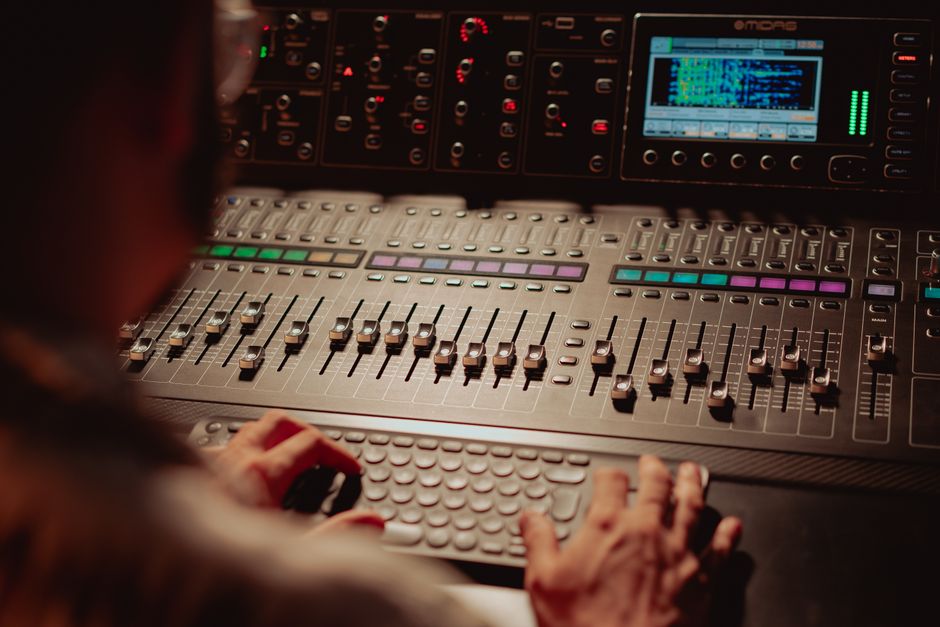
Audio mixing, mastering, and motion graphics
Your agreement must define exact engineering deliverables for all mixed assets. For standard spoken-word audio, files must be mastered to -16 LUFS (±1 LUFS) for stereo programs and -19 LUFS for mono, following international broadcast and streaming conventions.
Contracts must stipulate delivery of:
- High-resolution 24-bit/48kHz WAV files for long-term archiving
- Web-optimized 128kbps or 192kbps CBR MP3 files with complete ID3 metadata
- Separated stems (dialogue, music beds, and sound effects) for future video adaptation
- Synchronized motion graphics packages for 16:9 widescreen and 9:16 vertical cutdowns
If the engagement includes video podcasts, specify export formats (1080p or 4K ProRes and H.264), color space parameters, and closed-caption sidecar file requirements (.SRT or .VTT).
Accessibility and SEO assets (transcriptions, show notes)
Accessibility compliance and discoverability assets must not be treated as optional afterthoughts. The vendor agreement must establish firm delivery timelines for accurate transcripts, show notes, and chapter markers alongside the audio files.
Transcripts should achieve an audited 98% accuracy rate, correctly capturing industry terminology, company product names, and speaker attributions. Automated AI transcription outputs without manual human proofreading must be explicitly disallowed in the contract.
Show notes must arrive formatted with optimized headers, key topic takeaways, and relevant source hyperlinks. These assets support search visibility and Answer Engine Optimization (AEO), allowing search engines and AI discovery systems to read and reference show insights accurately.
Original music and sonic branding rights
Music licensing disputes can derail an entire branded content campaign. The production contract must clearly define whether audio tracks use licensed stock libraries or custom-composed brand themes.
If the vendor creates bespoke intro music and audio logos, the contract must confirm whether the brand receives an exclusive, worldwide, perpetual buyout, or if the rights are tied to a limited license.
The vendor must also indemnify the agency and client against copyright claims on all supplied music beds, ambient textures, and sound design effects. Securing these IP rights in the SLA prevents costly legal challenges down the line.
What most people get wrong
Treating audio production as a commoditized editing service
Agencies commonly assume any freelance engineer can handle enterprise podcasting. They pull a generic service agreement off the shelf to secure basic audio editing, expecting the vendor to know how to structure a corporate narrative instinctively.
This assumption breaks down when the show's job is pipeline development or strategic authority. As discussed in JAR Podcast Solutions' guide on how to write performance SLAs into a podcast agency contract, transactional sound editing ignores narrative flow, audience drop-off points, and business outcomes.
A standard audio technician cuts silence and levels audio tracks. A strategic production partner understands narrative hooks, crafts intentional sound design, and organizes content so busy professionals stay engaged for 30 or 40 minutes. Contracting for manual audio trimming when your client expects high-level brand storytelling guarantees disappointment.
Failing to require a dedicated Project Lead
Digital agencies frequently assume their own internal account directors can bridge the gap between client expectations and external audio engineers. Without a dedicated Project Lead on the podcast agency side, that balance breaks down rapidly.
According to operational best practices in The Ultimate FAQ Guide to Branded Podcasts, dedicated Project Leads are critical for keeping complex production timelines moving. They translate narrative goals into technical work orders, run weekly editorial standups, and track dependencies in shared management boards.
Leaving this operational position out of the SLA forces the agency's account team to manage audio file handoffs, stem exports, and scheduling logistics directly. A production SLA that lacks a dedicated project lead on the vendor side will consume your team's internal hours and strain client communication.
Securing your agency margins and client trust
Building a specialized branded podcast offering should expand your agency's service capabilities, not introduce unmanaged project liabilities. When you define production tiers clearly, enforce firm revision cycles, and document every technical specification in advance, you eliminate the delivery ambiguities that jeopardize agency margins.
Agencies do not need to invest millions to build high-end audio engineering bays in-house. Exploring white-label podcast production allows your team to deliver world-class narrative shows under your agency's banner while relying on experienced audio partners to handle end-to-end execution.
If you are evaluating how to add enterprise audio to your agency's service lineup, review our complete breakdown of audio podcast capabilities or read the agency partner blueprint for delivering client podcasts. To discuss building a custom production framework for your upcoming client campaigns, contact JAR Podcast Solutions.