
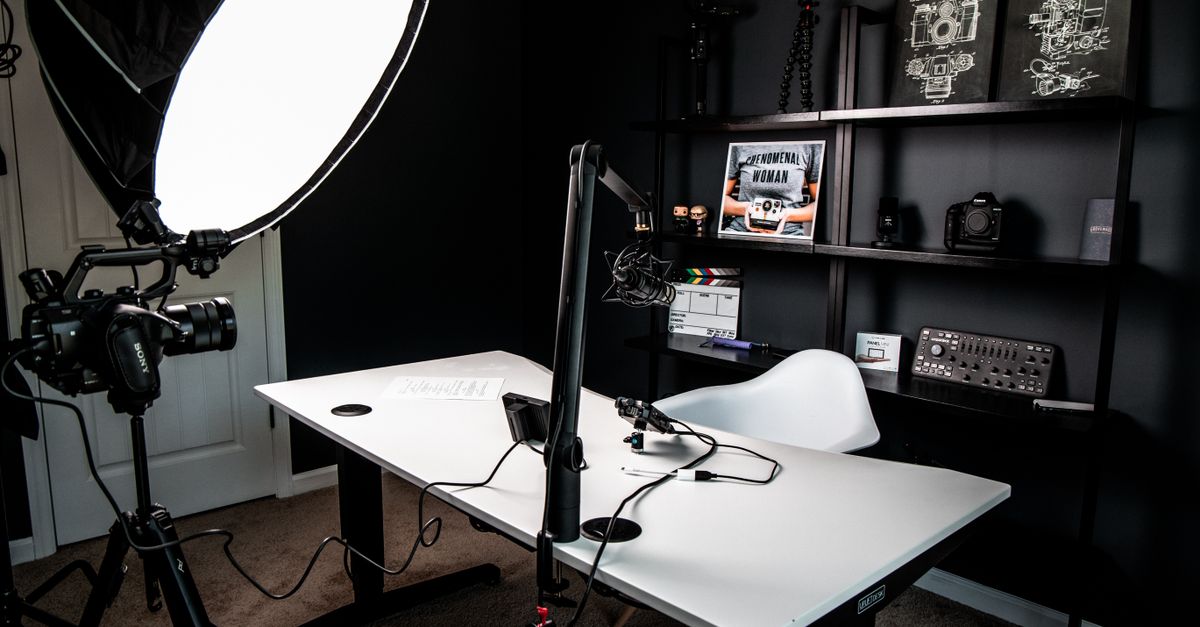
Many B2B marketing leaders are currently paralyzing their content strategies by assuming every corporate show must be a broadcast-quality YouTube production, driving up execution costs and causing team burnout. At JAR Podcast Solutions, we see marketing teams abandon solid audio concepts simply because they lack the resource engine for a multi-camera visual studio. The solution is applying a logic-based decision matrix to choose between audio-only, hybrid recording, or premium video before buying unnecessary gear. This strategic analysis maps your format directly to your business goals and audience habits, ensuring you build a sustainable asset instead of an expensive vanity project.
The problem with the video-first mandate in branded podcasting
The pressure to replicate massive media shows like The Joe Rogan Experience or New Heights is causing corporate marketing departments to make heavy financial commitments without understanding the medium. Teams are leasing professional studio spaces, buying cinema cameras, and hiring specialized editors before they have even recorded a pilot. This execution-first approach ignores the basic principles of audience retention.
When you force video onto a format that does not require it, you introduce massive friction. Production timelines stretch from days to weeks. Executives refuse to participate because they do not want to worry about lighting, wardrobing, or being camera-ready for a 60-minute interview. The barrier to entry rises so high that many brands scrap their show entirely before completing their first season.
Most importantly, this visual obsession overlooks how people actually consume content. Long-form video requires dedicated, active attention; listeners must keep their eyes on a screen. Audio, conversely, fits into the passive gaps of a busy day. Over-indexing on visual presentation often starves the actual editorial script, resulting in a show that looks clean but offers little substance.
Why the audio-is-dead myth persists for B2B brands
This persistent industry myth is fueled by a misunderstanding of how modern content discovery works. There is a distinct difference between where an audience discovers a show and where they actually spend time with it.
Discovery is now video-driven
A significant portion of podcast discovery happens on social feeds through short, visual assets. Marketing teams see clips performing well on LinkedIn or TikTok and mistakenly assume the entire long-form episode must be delivered as a video. The visual clip is simply the digital billboard; the audio feed remains the actual destination.
According to data compiled by Castos, video podcasts represent roughly 36% of all podcast content, yet 92% of podcast consumers still describe their activity as listening. This means that even when video is available, most of your audience is keeping their phones in their pockets. You do not need to build a full broadcast studio to capture the discovery benefits of short-form video.
Confusing content creators with B2B brands
Independent content creators build media empires supported by programmatic ads, sponsorship deals, and views. For these creators, raw volume and algorithmic reach are the only metrics that matter. A 4K YouTube feed is a requirement for their survival.
B2B brands, professional service providers, and enterprise organizations operate on a completely different model. They need high-trust conversion engines, long-term brand authority, and deep relationship building. A study by Uncommonly More indicates that 53% of podcast listeners still prefer pure audio content, and audio completion rates consistently outperform video retention. When your goal is educating a niche buyer, deep listening time beats viral passive views every time.
Platform siloing
The current platform landscape has created artificial pressure. Tech giants like Spotify and YouTube are locked in a battle for screen attention, heavily promoting their video podcast features to keep users inside their applications.
This platform competition causes corporate brands to optimize for specific platform algorithms rather than their audience's convenience. When you prioritize a YouTube-first strategy, you often isolate the traditional RSS feed listeners who prefer using open, platform-agnostic directory apps.
The three-question decision matrix from JAR Podcast Solutions
Before choosing a format, your team must step away from industry trends and evaluate your specific business constraints. At JAR Podcast Solutions, we use a three-question framework to help brand managers identify their optimal setup.
Question 1: What is the primary job of this podcast?
Every show must have a defined business objective. If the primary job of your show is internal employee communication, leadership development, or deep client education, audio-only is highly effective. It allows busy professionals to absorb your message without screen fatigue.
If your primary objective is top-of-funnel brand discovery, wide reach, or visual product demonstration, video is a strategic necessity. Visuals help humanize complex software solutions or introduce highly visible guest experts who carry strong personal brands.
Question 2: Where does your audience actually consume your content?
Auditory content is uniquely suited for times when eyes are busy but minds are free. It accompanies your target buyer on their morning commute, during exercise, or while performing routine tasks. This screen-free time is completely unavailable to video.
According to research from Baird Media, understanding these consumption habits is critical. If your target buyers are busy executives who consume industry analysis during transit, forcing them to watch a video will decrease your overall engagement. If your audience consists of younger digital natives who use YouTube as their primary search engine, you must establish a visual presence.
Question 3: What is your realistic production capacity?
Video increases the technical demands of production by roughly 300%. It adds file management overhead, complex editing workflows, visual branding demands, and significant equipment costs.
To help brands find their realistic baseline, JAR Podcast Solutions provides tiered options on our video podcasts service page:
- Essential Video: Remote recording setups using tools like Riverside to capture clean, individual webcam feeds. This approach is agile, cost-effective, and highly scalable.
- Professional Studio: Controlled, branded studio environments that offer consistent visual identity without requiring your team to manage the technical hardware.
- Premium Production: Cinematic, multi-camera on-location setups designed for flagship brand campaigns that require broadcast-level polish.
Choose the tier that fits your existing marketing infrastructure, not your highest creative ambition.
When the wrong format becomes a liability for your brand
Committing to the wrong format creates clear symptoms of operational strain. The most common sign is a production bottleneck. If your marketing team is spending dozens of hours color-correcting webcams, syncing audio files, and resolving video export issues, they are not spending time on script writing, distribution, or booking top-tier guests.
Another liability is the split-audience problem. When you publish a full video version alongside an audio version, you divide your metrics across multiple platforms. This fragmentation makes it difficult to track audience engagement and report consistent return on investment to your leadership team. You can learn more about managing these measurement challenges in our guide on The Complete Guide to Podcast ROI: Moving Past Vanity Metrics.
Finally, poor video actively harms corporate credibility. A low-resolution webcam video with harsh lighting, messy office backgrounds, and poor eye contact looks unprofessional. If your visual presentation does not match your brand's enterprise positioning, an audio-only format is a much safer guardian of your corporate reputation.

How JAR Podcast Solutions builds the hybrid compromise
You do not have to make a binary choice between an expensive television studio and a basic microphone. For most modern enterprise brands, the ideal path is a hybrid production model. This strategy keeps your production costs low while maintaining visual discoverability.
In this model, you record your interviews with cameras active, but you treat the audio feed as the primary editorial product. The full video is uploaded to Spotify or YouTube with minimal editing, while your marketing team extracts short-form video clips to use as promotional assets on LinkedIn and other social platforms. This workflow delivers high discoverability without the cost of editing a weekly television show.
Furthermore, technological developments have simplified this distribution. Apple Podcasts recently integrated HTTP Live Streaming technology, which allows listeners to transition between the audio feed and the video version within a single application depending on their immediate context. This convergence means your show can easily serve both preferences from a single production workflow.
| Format Option | Production Complexity | Discovery Value | Resource Cost | Best Business Use Case |
|---|---|---|---|---|
| Audio-Only | Low | Medium | Low | Internal communications, technical tutorials, narrative series |
| Hybrid Approach | Medium | High | Medium | B2B thought leadership, founder-led interviews, ongoing series |
| Video-First | High | Maximum | High | Flagship brand launches, product demonstrations, B2C campaigns |
Implementing this hybrid approach successfully requires structuring your production pipeline correctly from day one. To set up this distribution without doubling your editing budget, consult the integrated video podcast playbook for a step-by-step breakdown of multi-platform workflows.
Matching your format to your strategic business goals
A branded podcast is a long-term business asset, not a temporary marketing campaign. The format you choose today must remain sustainable for dozens of episodes. Before purchasing cameras or booking studio time, ensure your execution strategy aligns with your team's actual capacity and your buyer's actual media habits.
If you are ready to design a custom podcast strategy that drives measurable business outcomes, we can help. Contact our team to review your goals, analyze your target audience, and select the exact production tier your show requires. Visit JAR Podcast Solutions to request a custom quote or schedule a strategy session.