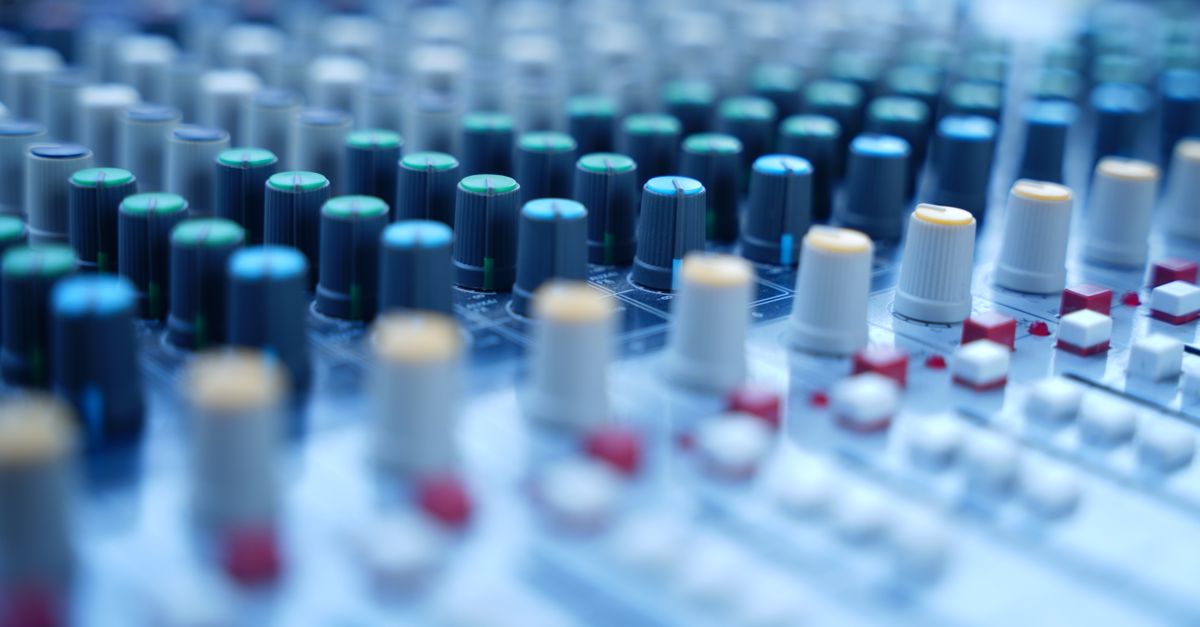
The Intel chime is four notes. It takes less than three seconds. And it has been one of the most recognized brand signals on the planet for nearly three decades — not because Intel spent billions on it, but because they treated sound as a strategic decision rather than a finishing touch.
Your B2B podcast has at least 20 minutes per episode to do the same work. Most shows squander all of it.
B2B marketers will spend months debating episode topics, guest lineups, and distribution cadence. They'll produce a 40-page content brief. And then they'll license a royalty-free music bed from a stock site, record the host on whatever mic happened to be in the closet, and call it done. The audio environment — the thing listeners are literally immersed in for the entire episode — never gets a strategic conversation.
That's not a production oversight. It's a brand oversight.
Sonic Branding Is Not Jingle Thinking
When most marketers hear "sonic branding," they picture a five-second audio logo and assume it's a consumer brand concern. Mastercard unveiled a full sonic identity system in 2019 — a globally adaptable melody that could be expressed across payment terminals, advertising, apps, and events. Netflix's "ta-dum" is now so embedded in cultural memory that the absence of it would feel wrong. These are designed decisions, not coincidental outcomes.
A podcast has a richer sonic inventory than either of those examples. The intro music and its emotional register. The host voice treatment and mic proximity. The quality of silence between questions. The transition cues that signal structure. The ambient texture underneath a recording. Each of these is a brand signal operating before the listener consciously processes a single argument or insight.
The distinction worth making here is between sonic logo and sonic identity. A sonic logo is discrete and repeatable — a four-note intro, a specific chime, the opening riff that tells a regular listener "this is my show." Sonic identity is broader: the full tonal personality of the show. Fast or measured. Warm or clinical. Minimal or rich. These qualities accumulate across every episode and shape how the brand is perceived over time.
Podcast listeners have no visual fallback. There's no logo in the corner of the screen, no color palette, no motion graphics to fill in the gaps. The audio channel is carrying 100% of the brand impression. That's an unusual amount of weight for a medium that many brands still treat as a side project.
As MarketingProfs noted in their analysis of sonic branding for B2B, all customers — including purchasing agents at large corporations — respond to emotional messages embedded in sound. The B2B versus B2C distinction has always been weaker than the industry assumed. People evaluate brands with their whole nervous system, not just their rational faculties.
Why B2B Listeners Are Especially Sensitive to Audio Trust Signals
Consumer podcast audiences have more tolerance for roughness. They came for entertainment. A slightly noisy recording doesn't break the experience if the story is good enough.
B2B listeners operate under different conditions. The VP of Marketing fitting in a podcast during a 22-minute commute. The Director of Content researching a potential vendor category. The Chief Brand Officer trying to understand what good looks like in a space their company is about to enter. These listeners arrived with a purpose. They are already pre-filtering for credibility signals, and audio quality is one of the fastest signals available.
Research on auditory processing consistently shows that voice quality affects perceived speaker competence before the content itself has been evaluated. A study by Stanford researchers found that listeners rated identical speech content as more credible when delivered in higher audio quality. The brain doesn't cleanly separate "what was said" from "how it sounded" — the production environment colors the message.
The halo effect here is real. When a listener registers "this sounds professional," that perception doesn't stay quarantined to the audio. It migrates to the brand behind the show. The implicit logic: if they care this much about how the microphone sounds, they probably care about their work too.
The asymmetry is worth noting: poor audio actively damages credibility in ways that are hard to recover from. Great audio becomes invisible and builds trust passively. A listener who notices your audio is almost always noticing something wrong.
As the Littlefield Agency observed in their analysis of B2B sonic identity, the misconception that "serious" industries don't need to bother with sound branding is exactly what leaves those brands sounding generic and forgettable. A well-crafted sonic identity can last for decades. The companies that invest in theirs now will hold that advantage as audio environments become richer and more competitive.
And the stakes per listener in B2B are simply higher. An entertained consumer who bounces after 10 minutes represents one lost listen. A skeptical VP who bounces after 90 seconds of poor audio might represent a lost enterprise deal.
The Audio Cues That Actually Shape Listener Behavior
Moving from principle to practice means auditing the specific sonic decisions your show is making — consciously or not.
The Intro: What Happens Before the First Word
Music tempo and musical key affect emotional priming before a single word of content lands. A show that opens with a driving, mid-tempo track in a major key signals energy and forward momentum. A show that opens with sparse, slow piano signals depth and deliberation. Neither is inherently better — but they create different audience expectations, and those expectations either align with or cut against the content that follows.
A healthcare compliance podcast that opens like a startup hype reel creates cognitive dissonance. A financial services show that opens like a meditation app signals the wrong authority register. The intro should tell a first-time listener: here is what kind of show this is, here is the authority level we're operating at, and here is how much of your attention this is going to ask for.
Keep the sonic logo short, repeatable, and distinctive. Intros that run longer than 30 seconds train listeners to skip forward. Once they've established that habit, they're skipping past the brand signal every time.
The Host Voice: Treatment, Not Talent
Voice quality in a podcast isn't about having a "radio voice." Most B2B podcast hosts don't, and that's fine. The relevant question isn't whether the voice is naturally compelling — it's whether the voice has been treated with consistency and care across every episode.
Room tone is the most common failure point. Bad room acoustics make a $500 microphone sound like a phone call. Reverb, ambient hum, HVAC noise — these aren't neutral. They communicate "we recorded this in a hotel room," and that impression is immediate and sticky. As Roger Nairn, CEO of JAR Podcast Solutions, wrote on the JAR blog: "audio quality isn't an afterthought. It's a signal. A trust cue. A moment that says, 'This brand cares about the details.'" The elements that seem technical — de-essing, breath control, mic proximity, headphone bleed prevention — are credibility accelerators, not production minutiae.
Beyond quality, consistency matters as much as the baseline level. Listeners who encounter the same voice treatment across dozens of episodes build a kind of Pavlovian recognition. The sound of the show starts to feel like home. That familiarity is earned through repetition, and it's one of the reasons episode-by-episode production discipline pays off over time in ways that are hard to measure per episode but unmistakable across a season.
Transitions and Structural Earcons
Earcons are brief, functional audio signals that orient listeners to the show's structure. The short musical cue that signals "we're moving to the interview," the tone that closes a sponsor segment, the distinct sound that marks a question-and-answer portion. These aren't aesthetic decisions — they're navigational.
Listeners who know where they are in an episode stay engaged longer. They're not spending cognitive resources tracking the show's structure; they're spending those resources on the content. Every earcon that reduces that cognitive load is returning attention to the substance of the episode.
This matters especially in B2B shows with complex or technical content. If a listener is tracking a nuanced argument about regulatory change or enterprise software architecture, the last thing they need is ambiguity about whether the show is wrapping up or entering a second act. Clear structural cues let the content breathe.
Earcons also contribute to sonic identity in aggregate. Over time, the specific sounds your show uses to signal structure become recognizable to regular listeners. They're part of what makes your show yours rather than a generic audio document.
The Silence Between Words
This is the most counterintuitive element on the list. The quality of silence in a podcast — the pauses between thoughts, the space after a strong statement, the beat before a guest responds — communicates authority and confidence.
Over-edited silence makes a show sound nervous. When every pause is collapsed to the minimum tolerable gap, the show feels anxious about the listener's attention. The implicit message is: we don't trust you to stay with us through a moment of reflection.
Hosts who are comfortable with silence, and editors who preserve it rather than excise it, create a fundamentally different listener experience. It's one of the quietest signals on this list and one of the most powerful.
The Strategic Case for Treating Sound as a Brand Decision
The B2B brands that treat sonic identity as a production detail will keep producing shows that work like content and sound like content. Forgettable in exactly the way most branded content is forgettable.
The brands that treat sonic identity as a brand decision — asking "what should this show sound like" before they ask "what should we talk about" — will build something more durable. A show that a regular listener can identify in the first five seconds of an episode. A show where the audio environment signals the same values as the copy, the visual identity, and the messaging. A show that builds trust before the host has said a single substantive word.
That's not a luxury for consumer brands. That's table stakes for any organization serious about audio as a strategic channel.
If you're thinking about how structure contributes to this, the episode architecture framework in How to Structure Podcast Episodes That Generate Clips, Posts, and Sales Content is worth reading alongside this. Sonic identity and episode structure are complementary systems — one shapes how the show feels, the other shapes how it moves.
And if the deeper question is whether your podcast is actually delivering measurable value beyond audio quality, How to Measure Trust — Not Just Traffic — From Your Branded Podcast addresses the metrics that matter most to the economic buyers who ultimately sign off on these investments.
Sound is the medium. Design it deliberately, or accept that it's designing your brand for you — probably in ways you wouldn't choose.