
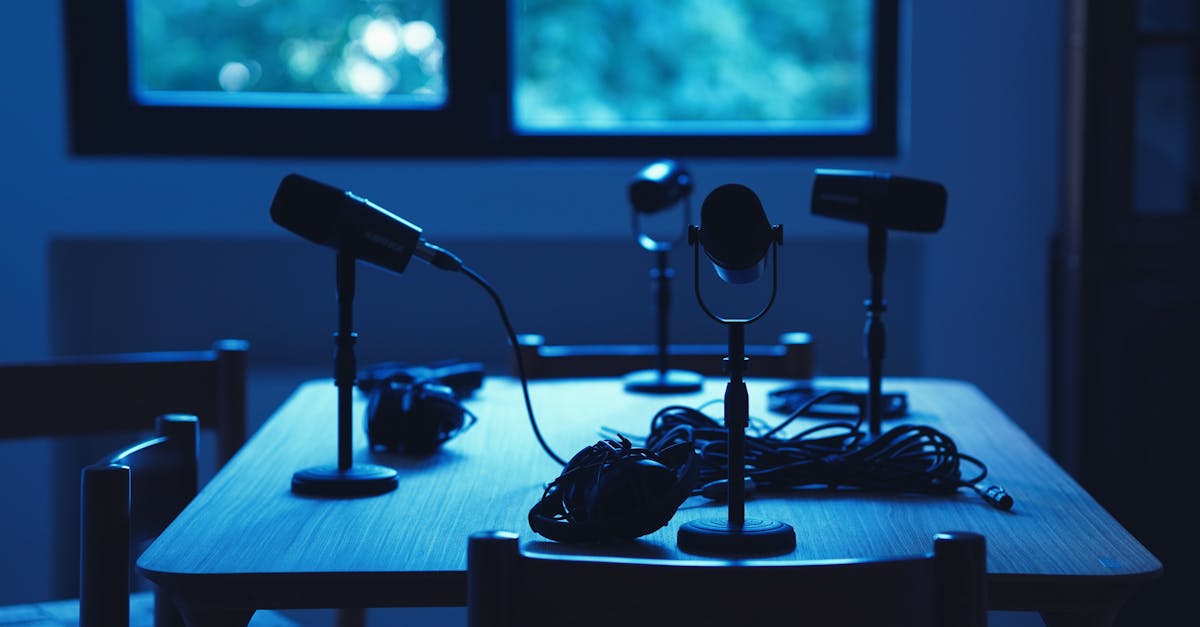
The biggest hidden cost of an enterprise podcast is not the recording hardware—it is the internal marketing team that suddenly has to learn audio engineering, guest booking, and cross-channel distribution on the fly. When enterprise marketing teams decide to launch a show, choosing between building an internal production team or partnering with a full-service branded podcast agency like JAR Podcast Solutions is a major operational decision. While building an internal studio makes sense for media companies with high-volume publishing needs, enterprise brands seeking measurable business impact and strategic distribution see a much higher return on investment by outsourcing to a specialized agency. This decision guide evaluates the real resource requirements, operational traps, and financial realities of both models in 2026.
Making the call: The quick verdict on in-house vs. agency
Every organization has unique resource constraints, technical capabilities, and creative ambitions. To determine which model matches your operational reality, review these common business scenarios:
- Choose in-house production if your organization plans to publish multiple episodes per week, already employs full-time multimedia producers, and views content creation as a core internal competency.
- Choose a full-service podcast agency if your primary goal is to drive brand trust, reach senior B2B decision-makers, and secure professional editorial direction without distracting your existing marketing team.
- Choose a freelance editor if your team has a strong, self-sufficient host, handles its own guest scheduling, and simply needs raw audio files cleaned and exported for hosting platforms.
For senior marketing leaders, the choice is rarely about the physical price of microphones. It is about where your team's energy should be spent. If your marketing managers spend their afternoons tracking down missing WAV files or learning how to remove background hiss in editing software, they are not spending that time on high-value strategy or customer relationships.
At JAR Podcast Solutions, we have spent nearly a decade helping brands design and execute audio programs that operate as serious business assets. We understand that a podcast is not a creative playground—it is a marketing channel that must earn attention and deliver measurable business outcomes.
Demystifying the two enterprise podcast production paths
To compare these paths fairly, we must look at what each model actually looks like in day-to-day operation. Many companies fall into the trap of assuming that "in-house" simply means buying a few USB microphones and recording Zoom calls.
An authentic in-house production setup requires a dedicated workflow. You must purchase professional hardware, treat a physical space for sound isolation, secure software licenses, and assign staff to manage the production pipeline. The marketing manager who already manages email campaigns, events, and social media is suddenly handed the title of executive producer. They must research microphone options, schedule prep calls with guests, edit hours of raw audio, write show notes, and upload files to hosting platforms. This DIY approach often starts with enthusiasm but quickly stalls when the reality of weekly production deadlines collides with other corporate priorities.
In contrast, hiring a specialized branded podcast agency transfers the entire operational burden to a dedicated external squad. When you work with a full-service agency, you are hiring a complete creative and technical department.

A typical agency team includes an executive producer to shape the show's narrative direction, a recordist and audio editor to manage sound quality, a chase producer to find and book guests, an audience growth specialist to manage promotion, and a dedicated project manager to keep the series on schedule. This model allows your brand's internal team to focus entirely on being the on-air experts and relationship builders, while the agency handles the technical execution.
When searching for the right team, look for partners who understand how to connect your audio strategy to your broader marketing goals. For a deeper breakdown of what to look for in an external partner, read our guide on how to find the best podcast producers for your brand.
Head-to-head evaluation: Comparing production models
To evaluate how these models perform under corporate scrutiny, we can measure them across four specific criteria: resource allocation, strategic alignment, audio quality, and speed to market.
| Evaluation Factor | In-House Production | Full-Service Agency | Freelance Editor |
|---|---|---|---|
| Resource allocation | High internal labor drain | Minimal internal staff time | Moderate internal coordination |
| Strategic alignment | Often drifts into a side project | Structured around business goals | Strictly technical execution |
| Audio quality | Highly variable | Exceptional and brand-safe | Basic clean-up only |
| Speed to market | Slow (long learning curves) | Fast (proven launch workflows) | Moderate |
Strategic focus and business alignment
The absolute biggest mistake brands make is treating a podcast as an isolated audio project rather than an integrated marketing channel. When produced in-house without senior creative direction, shows often lose their editorial focus. The episodes become long, unstructured interviews that interest the internal host but fail to provide value to the target audience.
A specialized agency builds your show around a strategic foundation. At JAR Podcast Solutions, we use our proprietary system to define the exact job your podcast must do, identify the specific audience it must reach, and establish the metrics that prove it is working.
This level of strategy is critical for brand perception. According to research published by Branded Podcast Services: The Pros, Cons, and Costs of Popular Production Options, 61% of listeners report feeling more favorable toward a brand after listening to their podcast. This favorability is only earned when the editorial content is highly polished, professional, and respectful of the listener's time.
Technical expertise and quality control
Achieving professional sound and video is more difficult than it appears. While a quality dynamic microphone like the Shure SM7B runs $250 to $400, simply buying the hardware does not guarantee professional results. An internal team must deal with room acoustics, microphone technique, level matching, noise reduction, and export standards.
In 2026, enterprise podcasts are heavily visual. Setting up multi-camera video recordings, managing lightning, color-grading footage, and editing short-form video clips for social media require specialized skills that generalist marketing managers rarely possess.
When you hire a professional team, you secure guaranteed quality control. Specialized agencies design custom soundscapes, record original theme music, and perform manual multi-track editing to remove awkward pauses, filler words, and technical glitches. For brands committed to maintaining a premium public image, investing in professional Audio Podcasts production ensures your content sounds as credible as your brand.
Distribution, growth, and measurement
Creating great audio is only half the battle; the other half is getting people to listen. An in-house team often struggles with the mechanics of podcast distribution and growth. They may upload the audio to a hosting platform, but they rarely have the time or expertise to manage search engine optimization (SEO), answer engine optimization (AEO), cross-promotional campaigns, or paid media spend.

Strategic agencies have dedicated growth teams who build custom launch and promotion plans. They manage metadata, pitch your show to major directories for editorial features, coordinate newsletter sponsorships, and execute retargeting campaigns to keep listeners engaged long after an episode ends. This operational support turns your podcast from a silent RSS feed into an active audience acquisition engine.
The real costs: In-house salaries vs. agency fees
When evaluating the financial side of this decision, many leaders fall victim to "sticker shock" when looking at agency proposals, while ignoring the massive, quiet cash drain of in-house production. To make an accurate comparison, you must calculate the fully loaded cost of internal labor.
If you decide to hire a dedicated internal team to run your show, the payroll costs are significant. According to US industry compensation data, a full-time podcast producer earns between $65,000 and $90,000 per year, while experienced audio engineers can command $80,000 to $100,000+ annually. When you factor in benefits, software licenses, recording equipment, and marketing overhead, a dedicated in-house team can easily cost upwards of $150,000 per year before you even record your first interview.
If you choose to use your existing staff instead of hiring new specialists, you must calculate the opportunity cost. If a marketing manager earning $80,000 per year spends 8 to 10 hours per week editing audio, writing show notes, and booking guests, that represents roughly $20,000 per year in diverted labor. As pointed out by John Isaacson in his breakdown of Outsource vs In-House Podcast Production: The Real Costs, Hidden Traps, and Decision Framework, DIY post-production costs a business hundreds of dollars per episode in opportunity cost alone. If that time were spent on core campaigns, customer acquisition, or sales enablement, the revenue impact of that lost time dwarfs the direct cost of hiring an agency.
In contrast, partnering with a full-service agency requires a clear, predictable budget. According to enterprise budget guides compiled by Trevor O'Hare on How Much Does It Cost to Launch a Branded Podcast?, professional full-service agency production typically requires a $15,000 to $50,000+ launch investment, with ongoing monthly production costs depending on frequency and format. While this represents a larger upfront cash outlay, it provides a complete team of specialists and guaranteed execution without adding a single dollar to your permanent headcount.
To see how these costs break down across different levels of execution, examine the standard industry tiers:
| Production Tier | Upfront Launch Investment | Ongoing Monthly Costs | Core Deliverables |
|---|---|---|---|
| DIY / In-House | $2,000 - $5,000 (Hardware/Software) | Staff salaries ($10k+ / month) | Raw audio, internal workflow ownership |
| Freelance Editor | Minimal | $50 - $200 per episode | Audio noise removal, basic mix, export |
| Mid-Tier Service | $1,500 - $5,000 | $1,500 - $4,000 per month | Edited files, basic show notes, social clips |
| Full-Service Agency | $15,000 - $50,000+ | $5,000 - $15,000+ per month | Full strategic blueprint, pro hosting, growth |
For a clear understanding of how these production budgets translate into specific deliverables and timelines, review our detailed Podcast FAQ.
The decision tree: Choosing your production model
To make your final decision, look at the specific goals, constraints, and operational patterns of your business.
Choose in-house production if...
You should keep production internal if your business operates as a media company where content creation is a daily, high-volume requirement. If you are producing multiple episodes per week across several different shows, the cost of outsourcing can scale quickly. In this scenario, building an in-house studio and hiring full-time, salaried audio and video professionals is the most cost-effective path. This model gives you complete day-to-day control over your production schedule and allows your team to rapidly experiment with new formats.
Choose a full-service podcast agency if...
You should partner with an agency if you are an enterprise organization that needs a polished, brand-safe show that represents your corporate values. Brands like Amazon, RBC, and Staffbase choose this path because they cannot afford technical glitches, missed deadlines, or amateur storytelling.
Consider Amazon's podcast, This is Small Business. This award-winning show succeeded because it combined narrative storytelling with a highly structured production process. Amazon's internal teams did not have to spend months learning audio editing or guest management; they partnered with JAR Podcast Solutions to handle the entire production lifecycle, ensuring the final product met global media standards.
If your podcast is intended to serve as a high-value marketing asset that builds brand authority and supports strategic sales enablement, outsourcing to an agency guarantees a professional execution.

Neither is right if...
Neither model will save your show if you do not have a clear reason for the podcast to exist. If your leadership team wants to start a podcast simply because your competitors have one, or because it feels like a trendy project, you will struggle to see a return on your investment. Before spending money on microphones or signing an agency contract, you must define the exact business problem your podcast is designed to solve.
Designing a show that performs: The final verdict
The debate between in-house and agency production is not about which model is objectively better—it is about which model matches your business goals and resource constraints.
If you choose to build your show internally, prepare to make a serious, long-term investment in staff, training, and operational workflows. If you choose to partner with an agency, you are paying a premium to bypass the learning curve, protect your internal team's focus, and secure a professional media asset from day one.
If you are ready to build an audience-first show designed with a clear Job, Audience, and Result, Contact JAR Podcast Solutions to discuss your project or request a detailed production quote.