
Institutional knowledge routinely gets trapped in academic journals because universities and research institutes lack the editorial structure to make specialized studies accessible. JAR Podcast Solutions helps higher education and research institutions translate peer-reviewed research into documentary-style narrative audio that prospective students, donors, and policymakers choose to spend time with. By applying the JAR System (Job, Audience, Results) and moving beyond flat interview recordings, institutions can convert impenetrable data into human-centered stories that build long-term public trust.
The academic publishing trap
Your institution's most significant research is likely sitting in a PDF that only a dozen specialists will ever read. Every year, universities pour millions of dollars into grant-funded inquiries, laboratory trials, and longitudinal studies. The resulting papers run dozens of pages, laden with disciplinary jargon, statistical caveats, and methodology disclosures designed strictly for peer review. While essential for scientific rigor, this format locks profound discoveries behind paywalls and academic obscurity.
The downstream consequences hit institutional communications directly. Vice presidents of advancement and university communications officers face increasing pressure to demonstrate the real-world value of faculty research to outside stakeholders. State legislatures demand accountability for public funding, major donors want to see tangible social impact, and prospective graduate students search for programs leading cultural and scientific progress. When an institution cannot clearly articulate what its scholars have uncovered, funding dries up, and public relevance erodes.
The standard fixes universities attempt rarely solve the issue. Typical communications offices try to condense a forty-page journal article into a 400-word campus press release or a bland blog post. In doing so, they strip away the intellectual nuance, flattening profound scientific inquiries into superficial marketing copy. Researchers cringe at the oversimplification, while the public scrolls past another institutional announcement that fails to spark curiosity.

Why institutional knowledge stays hidden
Bridging the divide between specialized scholarship and public understanding requires identifying where standard university communications break down. The failure is rarely due to a lack of compelling research; it stems from structural disconnects in format, editorial capability, and academic culture.
The text format strips the humanity out of the work
Academic writing enforces a passive, detached tone by design. It deliberately removes the researcher's doubts, late-night breakthroughs, false starts, and personal motivations. By treating objectivity as the total erasure of the human experience, traditional journals scrub away the very elements that make listeners care about an idea.
When people consume ideas through spoken audio, they connect with the voice behind the finding. Spoken stories reveal intellectual friction, curiosity, and conviction. When complex inquiries remain confined to text, non-specialists miss the stakes of the work and the human struggle that produced the data.
The internal editorial gap
Universities employ world-class subject matter experts, but academic mastery is entirely distinct from narrative journalism. Writing a literature review requires different muscles than structuring a three-act audio story designed to hold an audience for thirty minutes.
Most university communications teams are structured around reactive press operations, event promotion, and alumni magazines. They lack experienced audio producers who know how to pace an investigation, weave archival tape, and build dramatic tension. Without that dedicated editorial capability, institutional podcast efforts usually devolve into dry conversations that fail to capture outside attention.
The fear of "dumbing it down"
Faculty members often push back against public outreach campaigns out of a justified concern: intellectual distortion. Scholars spend decades refining their methodologies, and they fear that campus marketing teams will sacrifice factual precision for clickbait headlines.
This tension creates an institutional stalemate. Communications directors need public engagement, while faculty retreat into academic jargon to protect their reputations among peers. Without a collaborative production process that treats the research with intellectual seriousness, faculty will decline to participate.
The framework for translating research into audio
Translating dense scholarship into compelling audio does not require watering down the science. It requires building an intentional editorial process designed to respect academic depth while engaging external ears.
Here is the operational sequence for turning an academic paper into a narrative podcast episode:
- Define the exact business job of the show before booking talent.
- Restore the scholar's authentic voice and intellectual journey.
- Blend tape using an interview and narrative hybrid structure.
- Build spatial context with field audio rather than decorative music.
- Anchor the data inside an urgent human conflict.
Define the specific business job first
At JAR Podcast Solutions, we begin every project by asking what business outcome the institution needs to achieve. A podcast created to recruit doctoral candidates in biomedical engineering requires a completely different editorial lens than a series designed to cultivate major gifts from alumni foundations.
If the job is public policy influence, your episodes must focus on legislative timelines, economic costs, and systemic solutions. If the job is undergraduate enrollment, the focus shifts toward student-faculty mentorship and campus discovery. Defining the job and the exact audience determines every guest, question, and script revision that follows. We explored this dynamic when examining how higher ed marketers turn complex research into donor-focused podcasts.
Restore the researcher's voice
Moving research from the printed page to Audio Podcasts restores the nuance, intellectual texture, and personal commitment that journal formatting flattens. Spoken word allows scholars to explain why an issue keeps them awake at night without compromising academic precision.
A notable presentation by Macquarie University examined this dynamic, showing that podcasting techniques can translate academic discourses into accessible forms without losing complexity. When researchers explain their methodologies aloud, their enthusiasm and cadence communicate clarity in ways that a formal abstract cannot replicate.
| Production Format | Production Lift | Audience Retention | Best Institutional Job |
| :--- | :--- | :--- | :--- |
| Unedited Faculty Interview | Low (1-2 weeks) | Low (steep listener drop-off) | Internal faculty updates |
| Solo Research Monologue | Low to Medium | Medium (niche academic appeal) | Supplementary lecture material |
| Narrative Nonfiction Documentary | High (8-12 weeks) | High (sustained listener loyalty) | Major donor & public engagement |
| Interview / Narrative Hybrid | Medium to High | High (controlled pacing & human depth) | Category authority & graduate recruitment |
Adopt an interview/narrative hybrid format
Many campus podcasts launch as informal chat shows because they seem cheap and easy to make. Two academics sit in front of USB microphones for forty-five minutes and discuss an article. In practice, these unscripted conversations wander, use excessive jargon, and lose listeners within the first five minutes.
A hybrid approach balances expert audio with scripted narration. The researcher provides the primary evidence, insights, and personal observations, while an institutional host provides context, explains technical definitions, and guides the listener through the core narrative. As detailed in our Podcast FAQ, hybrid formats grant marketing teams precise editorial control over clarity and runtime while preserving the authentic human connection of the interview. This structure mirrors the approach we evaluated in our analysis of corporate documentaries vs standard B2B interviews: a 2026 comparison.
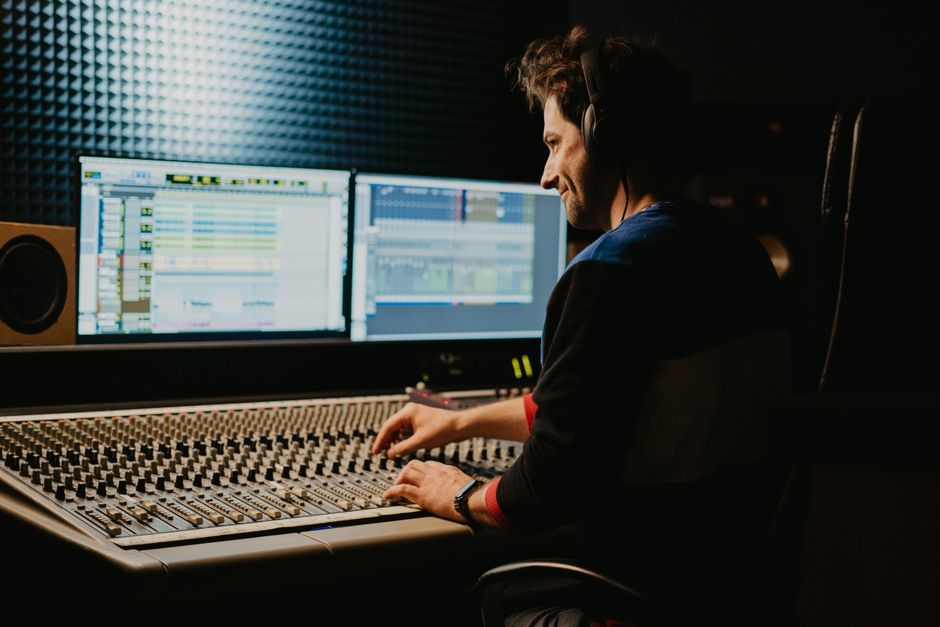
Use sound to build context, not just decoration
Sound design in research podcasts should never serve as audio wallpaper. Adding generic synth tracks under a professor's voice only distracts the listener. Instead, sound design should ground the scholarship in reality.
Bring audio recorders into the cleanroom, capture the ambient buzz of a marine research vessel, or pull historical radio broadcasts from the university archives. Research from UTS Impact Studios details how sound-rich scenes transport listeners into real environments and make complex social contexts immediate. These principles, also reflected in our client Case Studies, illustrate how acoustic design helps audiences understand technical subjects by giving abstract principles physical presence.
Connect the specific study to a human problem
Data points alone do not hold an audience. A study analyzing lithium extraction methods becomes compelling only when framed against the global race to manufacture batteries without destroying local water tables.
Initiatives like the University of Connecticut's Papers to Podcasts Unplugged specifically take this route, translating dense engineering papers into plain-language stories about materials science and environmental sustainability. Similarly, the NIH Intramural Research Program structures episodes of Speaking of Science around urgent public health puzzles—such as why the onset age of puberty has dropped across populations—rather than merely listing laboratory findings. When the listener understands what is at stake for actual human beings, the technical details fall naturally into place.
Signs your institution needs strategic support
Producing research-driven narrative audio requires specific workflows that differ from traditional higher education marketing. Institutional teams often hit operational ceilings after producing their initial batch of episodes in-house.
Watch for these warning signs across your production:
- Faculty scholars decline interview requests because previous communications misrepresented their findings.
- The final audio sounds like an unedited teleconference recording rather than a crafted documentary.
- Your team publishes episodes, but the alumni relations and advancement teams have no idea how to deploy them.
- The show relies entirely on two people talking because staff members lack the capacity to write narration and direct complex edits.
- Post-production drags on for months because the editorial workflow lacks clear approval stages for academic stakeholders.
When an internal team encounters these obstacles, the show becomes an exhausting obligation rather than an institutional advantage. Bringing in an outside team with dedicated narrative infrastructure protects faculty relationships and aligns production with concrete institutional objectives.

Building a lasting expertise engine
A branded podcast should never function as a temporary marketing campaign that shuts down after eight episodes. Universities operate on long cycles. Their research infrastructure generates continuous discoveries that compound in value over decades, and their communications strategy should operate on the same model.
When produced with deliberate editorial intention, a single narrative podcast episode becomes the primary engine for your broader communications department. A forty-five-minute documentary exploration of a breakthrough can be systematically broken down into:
- Audio clips embedded in major donor pitch decks to illustrate research impact.
- Scripted summaries adapted into university research magazine features.
- Video excerpts designed for high-performing distribution across institutional social feeds.
- Accessible educational audio modules for graduate school admissions campaigns.
- Clear transcripts optimized to improve institutional discoverability in search and AI query systems.
Instead of asking your faculty to participate in seven disconnected marketing initiatives, you conduct one structured, professionally directed interview. That recorded conversation serves as high-fidelity raw material, feeding every channel across your institution for months.
When you treat your research assets as an integrated knowledge system, you stop chasing short-term news cycles. You build permanent media infrastructure that documents your institution's intellectual authority, proves value to stakeholders, and commands the deep attention your scholars have earned.
To evaluate how a structured audio strategy can translate your faculty's research into measurable institutional influence, Contact JAR Podcast Solutions to begin planning your show.